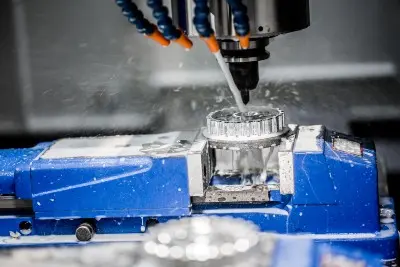
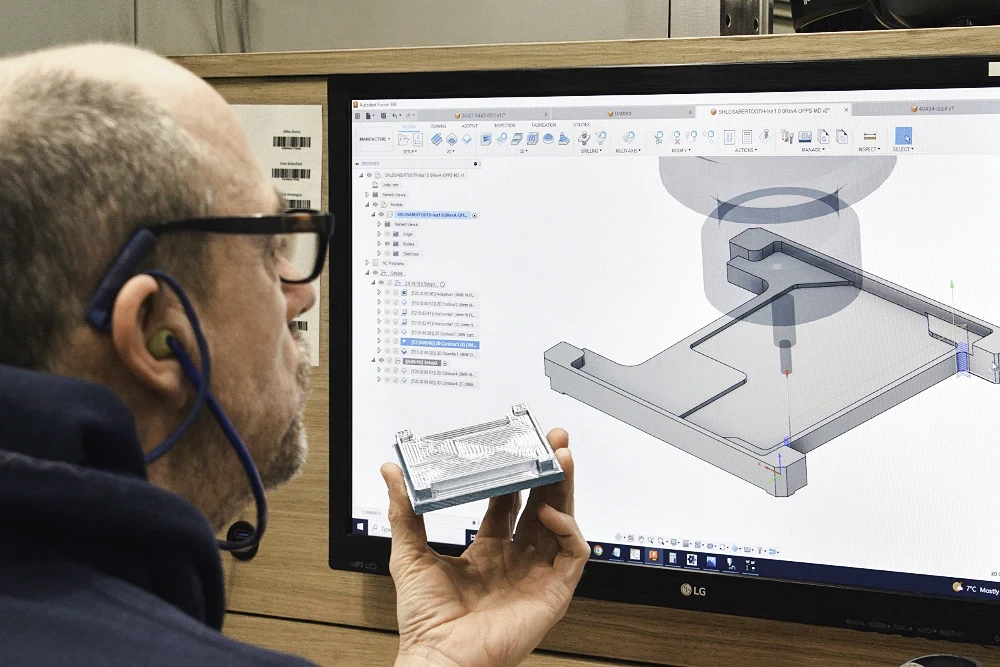

Design engineers often need to balance function, tolerance, material, finish, cost, lead time and production risk. Procurement and Operations then need that design to be manufactured reliably, repeatedly and at a commercially sensible cost. Design for Manufacture helps bring these priorities together before machining begins, so avoidable problems can be removed before they affect quoting, production, inspection or delivery.
Design for Manufacture is the process of reviewing a part design before production to make sure it can be manufactured efficiently, consistently and to specification. In CNC machining, DFM helps reduce avoidable cost, lead time, inspection difficulty and production risk.
Key takeaways
- Design for Manufacture helps identify risk before a part is quoted, programmed or machined.
- DFM in CNC machining can involve material choice, geometry, tolerances, finishing, inspection, batch size and repeatability.
- Tight tolerances, complex features, specialist materials and post-machining finishes can increase cost and lead time when they are not functionally required.
- A good DFM review protects the part’s function first, then looks for practical ways to reduce avoidable machining, finishing and inspection difficulty.
- Procurement, Engineering, Quality and Operations all benefit from clearer manufacturing decisions before the order is placed.
Planning a new machined component or reviewing an existing part?
What Is Design for Manufacture?
Design for Manufacture, often shortened to DFM, is the process of reviewing a design before production to make sure it can be made efficiently, consistently and to the required specification. In CNC machining, this means checking whether the material, geometry, tolerances, features, finish and inspection requirements support a reliable production route.
A DFM review can look at material choice, machinability, tool access, internal radii, deep pockets, hole sizes, thread requirements, wall thickness, surface finish, finishing requirements, critical dimensions, inspection method, batch quantity and repeatability.
The aim is not to weaken the design or remove important functional requirements. The aim is to understand which requirements are essential, which ones add manufacturing difficulty, and which ones could be changed without compromising the part’s purpose.
For CNC machining, DFM turns a drawing into a more reliable manufacturing plan. It helps the supplier quote accurately, choose a suitable machining strategy, plan inspection properly and highlight issues that could otherwise appear during production.
Why does DFM matter in CNC machining?
DFM matters in CNC machining because small design choices can have a large effect on cost, lead time, quality and repeatability. A feature that looks simple on a drawing may require extra setups, longer tools, slower cutting conditions, additional inspection or a specialist finishing process.
A DFM review can help reduce machining time, setup complexity, tool changes, material waste, inspection burden, rework risk, finishing problems, late design changes and production delays.
It can also improve first-off approval, batch consistency, supplier confidence when quoting and lead time predictability. This matters to engineers because it protects design intent. It matters to procurement professionals because it makes costs and supplier decisions easier to justify. It matters to operations because it reduces schedule risk. It matters to quality because it makes inspection expectations clearer before the part reaches goods-in.
The most useful DFM conversations happen before a drawing is frozen or before an RFQ is issued. At that point, there is still room to adjust non-critical features, select a more suitable material, define inspection expectations and choose a finish that meets the application without adding unnecessary delay.
How does material choice affect manufacturability?
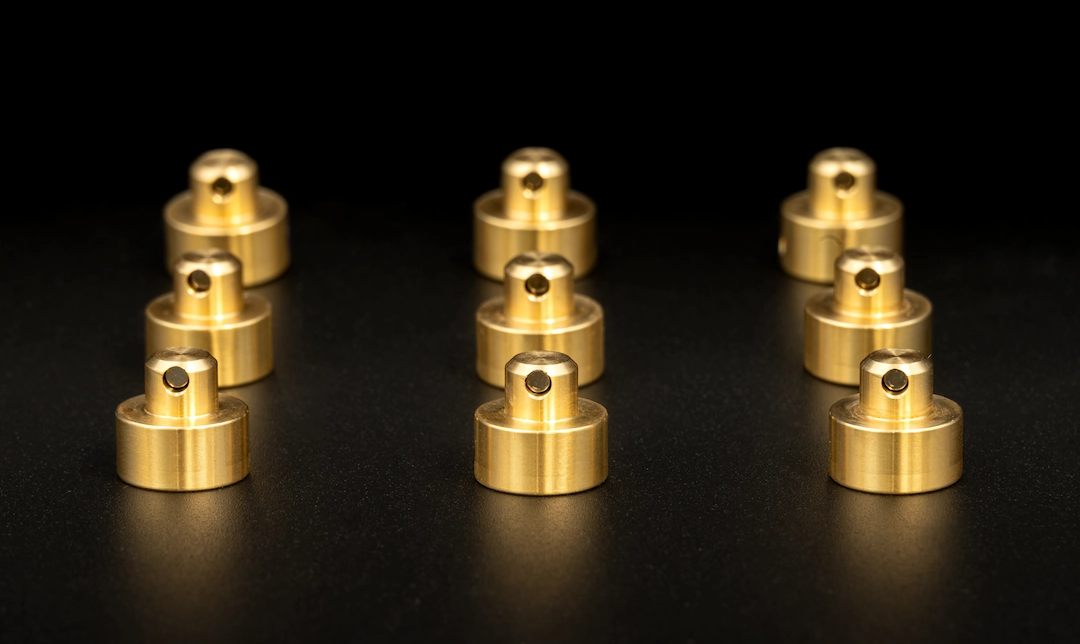
Material choice affects manufacturability because it influences raw material cost, availability, machining time, tooling, finishing options, dimensional stability and lead time. The right material is the one that meets the application without adding unnecessary production risk.
Some materials machine quickly and predictably. Others need slower cutting conditions, specialist tooling or closer process control. Some materials are readily available in common sizes and grades. Others may involve longer sourcing times or minimum order quantities.
For example, aluminium is often selected because it is lightweight, readily machinable and suitable for many finishing processes. Stainless steel may be needed for corrosion resistance or strength, but it can increase machining time compared with some aluminium grades. Engineering plastics can be useful for weight, insulation or chemical resistance, but some plastics move during machining or need careful workholding.
The most specialist material is not always the best choice. A drawing may specify a high-performance grade because it was used previously or selected early in development. In some cases, a more standard grade may still meet the functional requirement while reducing cost, sourcing time and machining difficulty.
A CNC supplier can give better material advice when they understand the part’s working environment, including load, temperature, corrosion exposure, cosmetic expectations, regulatory requirements, mating parts, cleaning processes and expected production volume.
How does geometry affect CNC machining cost and lead time?
Geometry affects CNC machining cost and lead time because it determines tool access, setup strategy, machining time, workholding, inspection access and the risk of distortion. A simpler feature can be the better engineering choice when it protects function and removes avoidable production difficulty.
Common geometry issues include deep pockets, thin walls, sharp internal corners, small features, hard-to-reach surfaces and features that need machining from multiple orientations. These details affect how the part is programmed, held, cut and inspected.
Deep pockets can require longer tools, which are more prone to deflection and vibration. Sharp internal corners can be difficult to machine because rotating cutters naturally leave a radius. Thin walls can move during machining. Features on multiple faces can increase setups, adding time and opportunities for variation.
This does not mean every part should be simplified. Complex geometry is sometimes essential. DFM separates functional complexity from avoidable complexity. If a feature genuinely affects performance, the manufacturing plan should support it. If it does not, a small design change may reduce cost and lead time without affecting how the component works.
For machined parts, useful DFM questions include:
- Can the feature be reached with standard tooling?
- Can the part be held securely without distortion?
- Does the part need multiple setups?
- Are internal radii suitable for available cutter sizes?
- Are thin walls needed for function?
- Are cosmetic surfaces exposed to clamping or handling risk?
For parts with milled faces, pockets, slots or complex profiles, it may also be useful to review the design against CNC milling constraints before finalising the drawing. For turned parts, the review may focus on diameter changes, bores, grooves, threads and whether the part is better suited to CNC turning or a combined machining route.
Why do tolerances matter in Design for Manufacture?
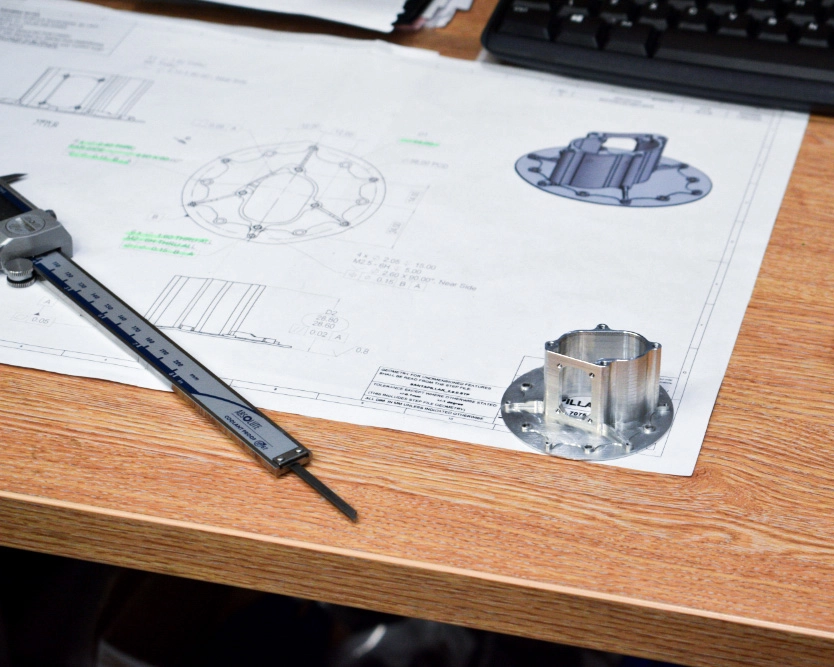
Tolerances matter in Design for Manufacture because they tell the supplier how much variation is allowed. This affects quoting, programming, machining, inspection and rework risk. Good DFM helps identify which tolerances are critical to function and which can be opened safely.
Tight tolerances are often necessary on bearing seats, sealing faces, sliding fits, positional features and critical assembly interfaces. Problems start when tight tolerances are applied by default to features that do not affect function. This can increase cost and lead time without improving the component.
A tight tolerance can affect quoting time, programming, setup strategy, machining conditions, inspection time, rework risk and batch repeatability.
Precision should be intentional. A drawing with clear critical features helps the supplier focus effort where it matters. A drawing with tight general tolerances can make the part harder to quote, produce and inspect.
A practical DFM conversation may ask which features affect fit, function, safety, sealing, alignment or performance. It may also identify where a standard tolerance would be suitable. This helps engineers protect design intent and helps procurement professionals and buyers understand why one quote may be higher than another.
Why should finishing be considered before machining?
Finishing should be considered before machining because the selected finish can affect material choice, surface preparation, masking, coating thickness, critical dimensions, cosmetic acceptance and lead time. The best time to plan finishing is before the manufacturing route is fixed.
Finishing is sometimes treated as a separate step after machining. That can create problems. A coating may add thickness to a critical dimension. A cosmetic surface may need a different machining strategy before anodising or bead blasting. A plated, painted or coated part may need masking, additional handling, transport, curing, inspection or supplier coordination.
Finishing can affect material selection, surface roughness requirements, machining marks, deburring, masking, coating thickness, thread protection, cosmetic expectations, corrosion resistance, post-finish inspection and overall lead time.
Customers sometimes request a finish that is more expensive, slower or more demanding than the application requires. In other cases, the finish is essential because the part needs corrosion resistance, cleanability, wear resistance, electrical properties or a specific cosmetic standard.
A supplier can give better advice when they understand how the part will be used. For example, an internal bracket may not need the same cosmetic finish as an external enclosure. A sealing face may need different protection from a non-critical surface.
Finishing decisions should be made before machining and production planning. This helps avoid late changes, rework, dimensional surprises and avoidable lead time extensions.
If you are concerned that finishing may affect delivery, contact the Penta Precision team before finalising the drawing. We can review the material, finish, critical dimensions and masking requirements together so the production route is planned around the final requirement.

Why should inspection be considered during design?
Inspection should be considered during design because a machined part must be verified as well as manufactured. A feature that is difficult to measure can create uncertainty, delay or disagreement later, even when the machining itself is possible.
DFM should consider how the part will be checked before it reaches production. This includes datum structure, drawing clarity, tolerance stack-up, access for measurement, critical features, surface finish requirements, inspection equipment and documentation requirements.
Quality teams may need evidence such as a first article inspection report, CMM report, material certificate or certificate of conformity. If the drawing does not clearly define the critical features, datums or acceptance criteria, inspection becomes harder to plan and agree.
Design choices can affect inspection in practical ways. A deep internal feature may be difficult to access with standard measuring equipment. A tight positional tolerance may need a clear datum scheme. A cosmetic requirement may need agreed acceptance criteria before finishing.
A useful DFM review may ask:
- Which features are critical to function?
- Which datums should inspection be based on?
- Can the required features be measured reliably?
- Is the tolerance stack-up clear?
- Are surface finish requirements specified where they matter?
- Is post-finish inspection needed?
- What documentation is required with the parts?
Quality starts before production begins. A part should be designed not only to be machined, but also to be verified clearly and consistently.
When should DFM happen?
DFM should happen as early as possible, ideally before the design is frozen, before an RFQ is issued or before a prototype moves into repeat production. Earlier input gives more options to improve cost, lead time and repeatability.
Design for Manufacture can be useful:
- Before releasing a new drawing for quotation.
- Before ordering a prototype.
- Before moving from prototype to production.
- Before changing material or finish.
- Before increasing batch size.
- After repeated quality or lead time issues.
- When re-quoting a cost-sensitive part.
- When changing supplier.
- When a part needs more formal inspection evidence.
DFM can still help later, but the options become more limited once material has been ordered, the process has been planned or the drawing has been approved internally. Late changes can also create revision control issues.
Early supplier involvement helps prevent avoidable problems from becoming part of the production plan. It also makes quoting more reliable because the supplier can assess the design against the intended manufacturing route.
Want a step-by-step guide to changing your CNC machining supplier?

Who should be involved in the DFM process?
The DFM process should involve the people who understand design intent, commercial constraints, quality requirements, production schedule and machining reality. Good DFM reduces friction between what the part must do, what it should cost and how it will be produced.
The most useful input often comes from Design Engineering, Manufacturing or Production Engineering, Procurement, Quality, Operations or Planning, and the CNC supplier, estimator or machinist.
Each role brings a different risk lens. Engineering protects function and performance. Procurement protects quote accuracy and supplier confidence. Quality protects inspection evidence and drawing clarity. Operations protects lead time and schedule risk. The supplier protects manufacturability, workholding, tooling, finishing and repeatability.
DFM works best when these priorities are discussed early. It gives everyone a shared basis for deciding which requirements are essential and which choices are adding avoidable cost or risk.
What might a CNC supplier challenge during DFM?
A CNC supplier may challenge any design choice that affects manufacturability, repeatability, inspection, finishing, cost or lead time. Challenge should not be treated as obstruction. It is a way to surface risk before it becomes a production problem.
A supplier may ask whether:
- A tight tolerance is functionally required.
- A standard material grade could meet the application.
- A feature is difficult to access.
- A radius, thread or hole size could be standardised.
- A deep pocket could be made shallower.
- A thin wall is needed for function.
- A finish is suitable for the working environment.
- Masking or coating thickness has been allowed for.
- Inspection requirements are clear.
- A datum scheme supports reliable measurement.
- The part could be made with fewer setups.
- Repeat production needs a different approach from prototype machining.
These questions help the customer make a better decision. For example, relaxing a non-critical tolerance may reduce inspection time and rework risk. Replacing a custom thread with a standard thread may improve lead time and tooling availability. Planning a cosmetic surface early may protect the finish from machining marks, clamping or handling damage.
A good supplier does not just price the drawing. They test whether it can be produced reliably and explain where design choices may affect the final result.
What are the benefits of DFM?
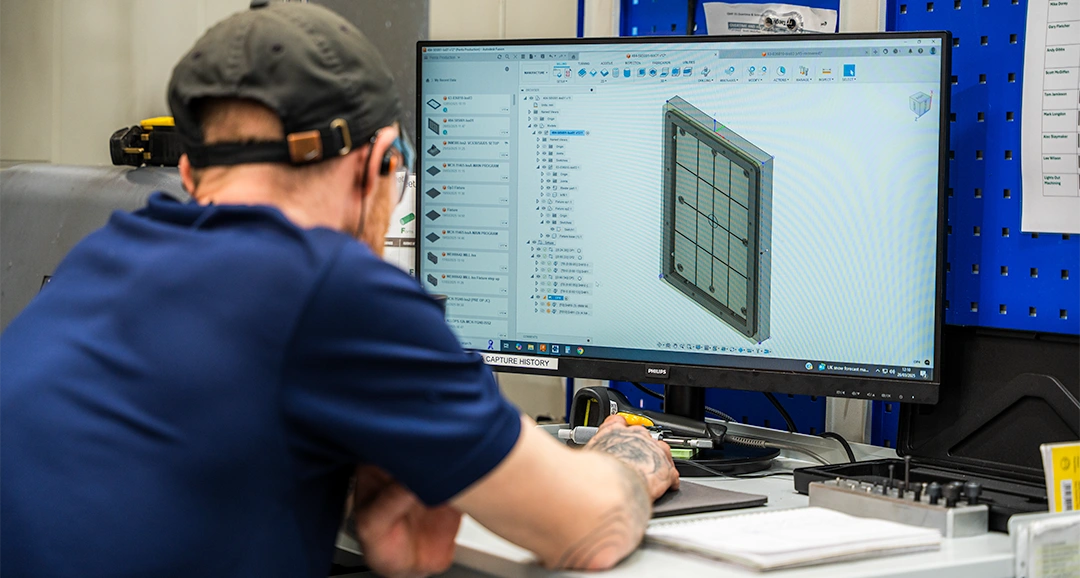
The main benefit of DFM is that it reduces the gap between what is designed and what can be produced consistently. In CNC machining, that can improve cost, lead time, quality, inspection clarity and repeatability.
Practical benefits can include:
- Lower production cost where avoidable complexity is removed.
- Shorter avoidable lead time.
- Fewer late design changes.
- Reduced rework.
- Better first-off outcomes.
- Improved batch repeatability.
- More reliable quoting.
- Clearer inspection expectations.
- Better supplier communication.
- More predictable delivery performance.
- Stronger alignment between Engineering and Procurement.
- Less pressure on Operations.
- Better evidence for Quality before parts reach goods-in.
DFM does not guarantee the cheapest possible part. That should not be the goal when the part has critical functional, regulatory or quality requirements. A good DFM review protects the application first, then removes manufacturing difficulty that does not need to be there.
What is the difference between DFM and DfMA?
DFM focuses on designing a part so it can be manufactured effectively. DfMA combines Design for Manufacture with Design for Assembly, so it considers both how individual parts are made and how they fit together in the final product.
In CNC machining, DFM may look at material, geometry, tolerances, tool access, finishing and inspection. Design for Assembly may look at part count, fasteners, alignment, handling, assembly time and the risk of mistakes during build.
For example, DFM may recommend changing an internal radius so the part can be machined more efficiently. Design for Assembly may recommend changing a locating feature so the part can only be assembled in the correct orientation.
For buyers and engineers, the practical distinction is simple. DFM asks whether the part can be made reliably. DfMA also asks whether the final product can be assembled efficiently and consistently.
What does DFM look like in practice?
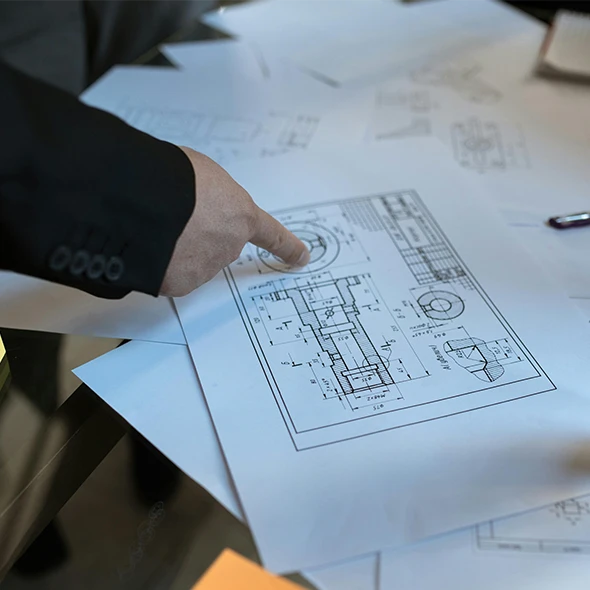
In practice, DFM is a structured review of the drawing, CAD model, application, material, finish, tolerances, inspection requirements and production expectations. It becomes valuable when it leads to specific decisions that protect function and reduce manufacturing difficulty.
Consider a machined enclosure at prototype stage. The initial concept may include a specialist material, tight tolerances across several non-critical features, sharp internal corners, cosmetic finishing and several hard-to-access details. Each requirement may look reasonable alone. Together, they can increase machining time, inspection effort, finishing risk and unit cost.
A practical DFM review would first identify what the enclosure must do. Does it need to protect electronics? Does it need to seal? Which faces are visible? Which holes locate other parts? Which dimensions affect assembly? Which surfaces need post-finish inspection?
From there, the supplier may suggest a more readily available material grade, larger internal radii, standard thread sizes, adjusted tolerances on non-critical features, a clearer cosmetic specification or a finishing route that meets the application with less lead time risk.
The design can still meet the application requirements. The manufacturing route becomes clearer and more repeatable because material, machining, finishing and inspection have been planned together.
How do you start a DFM review?
You start a DFM review by giving the supplier the information they need to understand both the drawing and the application. The more context the supplier has, the better they can protect cost, lead time and function.
Useful information includes:
- 2D drawings.
- CAD files.
- Material requirements.
- Finish requirements.
- Critical features.
- Datum and inspection requirements.
- Batch quantity.
- Expected repeat demand.
- Target lead time.
- Assembly context.
- Mating parts.
- Functional requirements.
- Cosmetic expectations.
- Previous manufacturing issues.
- Known pain points with cost, lead time, quality or finishing.
Application context is especially important. A tolerance that looks excessive may be essential for a sealing face. A finish that looks expensive may be needed for corrosion resistance. A material that looks difficult to machine may be required because of the working environment.
Clear context helps avoid the wrong kind of cost reduction. The aim is to remove unnecessary production risk, not to compromise the part.
Planning a new machined component or reviewingan existing part?

In conclusion
Design for Manufacture is a practical way to reduce CNC machining risk before production begins. It helps confirm that a part can be machined, finished, inspected, delivered and repeated without avoidable cost or delay.
The value of DFM comes from making better decisions early. Material choice, geometry, tolerances, finishing and inspection all affect the final manufacturing route. When those areas are reviewed before quoting or production, Engineering can protect function, Procurement can make a more defensible supplier decision, Quality can define evidence clearly, and Operations can plan with more confidence.
The best manufacturing problems are the ones removed before production starts.
Planning a new machined component or reviewing an existing part? Contact Penta Precision with your drawings, CAD files and application requirements, and our team can review the key areas that may affect cost, lead time, finishing and manufacturability.