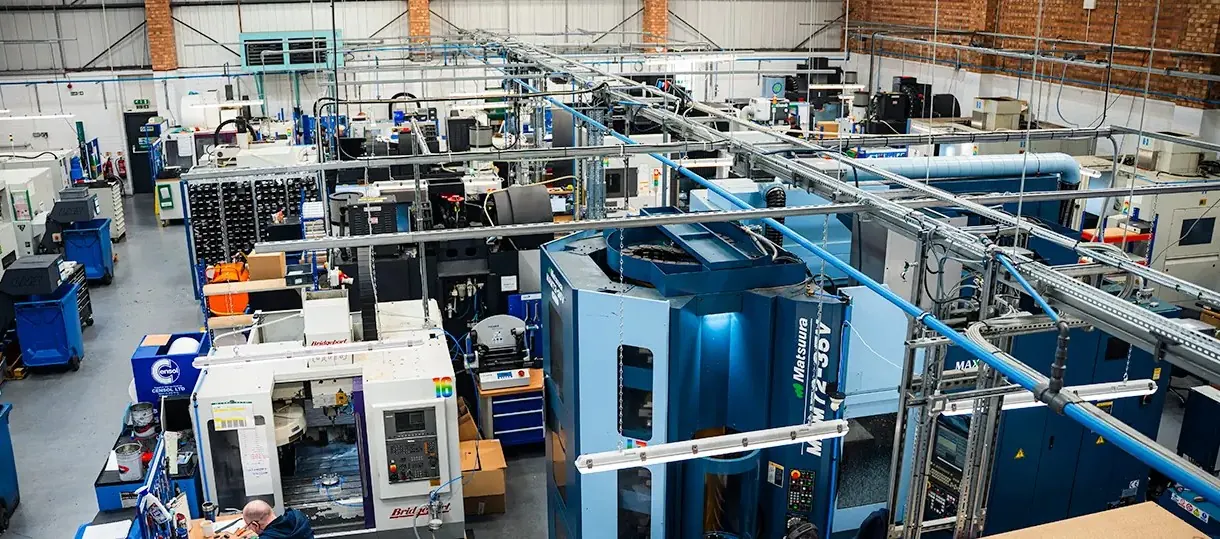

CNC machining cost can vary from a modest spend for a simple repeat aluminium part to a far higher figure for a complex, tight-tolerance component with specialist material, inspection, finishing, and urgent lead times. The price is shaped by what has to be machined, how accurately it must be held, how many parts are needed, and how much setup, inspection, and coordination sit behind the job.
If you are exploring manufacturing options for a new component, working with a specialist CNC machining service in the UK can help clarify the real cost drivers before production begins.
If you are trying to understand what a quote should look like, or why one supplier is more expensive than another, the useful question is not just “how much does CNC machining cost?” It is “what is driving the cost of this specific part, and where can it be reduced without creating risk later?”
Key takeaways
- CNC machining cost is driven by material, geometry, tolerances, setup time, quantity, finishing, inspection, and lead time.
- Simple repeat parts are usually far cheaper per unit than complex prototype parts with multiple setups and tight tolerances.
- A low headline quote can become an expensive order if inspection, finishing, packaging, or documentation requirements are not fully captured.
- The best way to reduce cost is usually through design and process decisions before the part reaches the machine.
- A useful CNC quote should explain what drives price, what assumptions have been made, and what would change the cost.
The short answer: how much does CNC machining cost in the UK?
In the UK, CNC machining cost is rarely a fixed market number because the spread between a straightforward part and a demanding one is so wide. A simple machined component made in free-cutting aluminium with open tolerances and modest cosmetic requirements may be relatively economical because setup and programming are spread across more parts.
A complex stainless steel or titanium part with tight positional tolerances, deep pockets, thin walls, specialist finishing, and a detailed inspection pack will cost significantly more because machining time, risk, and verification effort increase.
Two parts of similar size can therefore have very different prices. One may run in a stable, efficient process with limited intervention. Another may require slower feeds, additional workholding, multiple operations, and extensive inspection.

Why is CNC machining expensive?
CNC machining can appear expensive because the price includes far more than cutting material on a machine. Programming, setup, tooling preparation, inspection planning, and finishing coordination all sit behind the final component. For prototype parts in particular, these fixed activities are spread across only a few pieces, which increases the unit cost.
As production quantities increase, the setup effort is distributed across more parts and the unit price usually falls.
How CNC machining costs are calculated
Although every supplier uses their own estimating model, most CNC machining quotes follow the same basic structure.
Typical CNC machining cost model
Total cost =
- Material cost
- Machine time × hourly rate
- Setup and programming time
- Inspection and verification
- Finishing or post-processing
- Packaging and delivery
Material cost
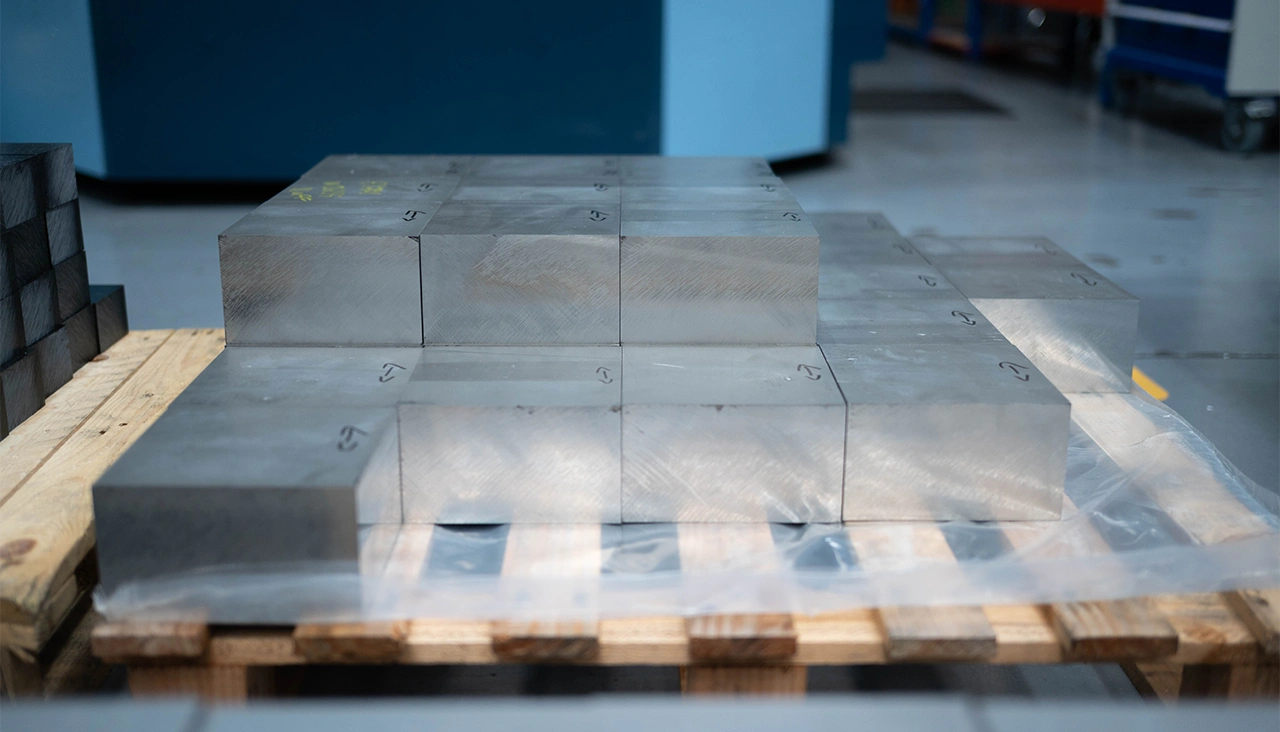
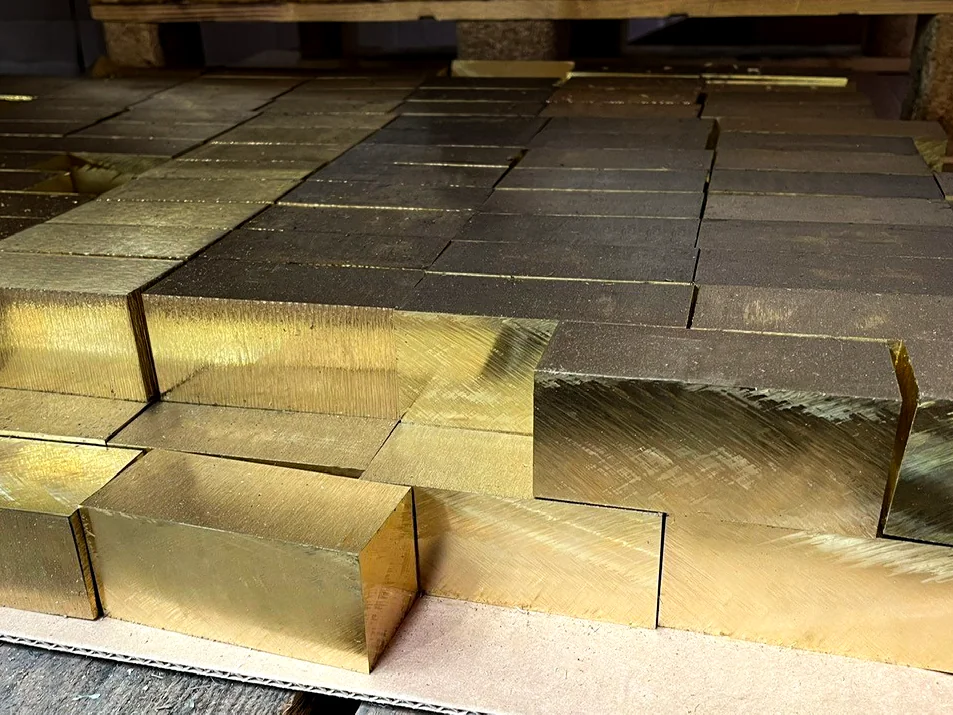
Raw material cost depends on the alloy or plastic specified and how efficiently the stock size fits the finished component. When projects require high-precision aluminium components, a dedicated aluminium CNC machining service can often deliver the most cost-effective results.
Machine time
Machine time is usually the largest cost driver. It reflects cycle time, tool changes, feed rates, and how difficult the material and geometry are to machine.
Setup and programming
Before parts are machined, the programme must be created, tooling prepared, and fixtures set up. These fixed costs are spread across the batch quantity.
Inspection
Inspection may involve simple dimensional checks or more formal requirements such as CMM reports, FAIR documentation, and traceability packs.
Finishing
Processes such as anodising, passivation, bead blasting, or plating add cost through handling, coordination, and additional processing steps. Surface treatments such as hard anodising add protective oxide layers to aluminium parts used in demanding environments.
Packaging and delivery
Protective packaging, labelling, documentation packs, and shipping methods all contribute to the final price.
What factors affect CNC machining cost?
Material type
Material choice affects machining time, tooling wear, achievable finish, and inspection approach. Aluminium is often faster and easier to machine than stainless steel or titanium.
Quantity and batch size
Batch size strongly influences unit cost. In low volumes, setup and programming effort is spread across only a few parts. In larger batches, that cost is diluted.
Part geometry and complexity
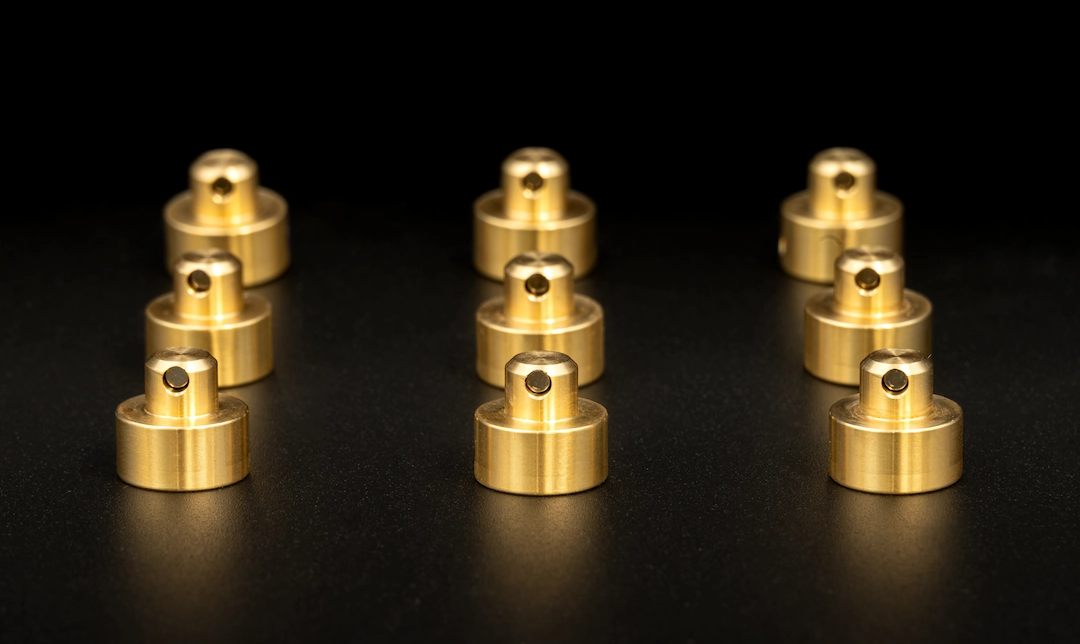
Deep cavities, thin walls, small internal radii, and awkward feature access increase machining difficulty and cycle time. Complex geometries are often produced using CNC milling, which allows multi-axis machining and precise control over intricate features.
Cylindrical features
Cylindrical components such as shafts or bushings are commonly manufactured using CNC turning, where the material rotates while cutting tools remove material.
Multi-axis complexity
Highly complex components may benefit from 5-axis CNC machining, which allows multiple faces of a part to be machined in a single setup and can reduce overall machining time.
Tolerances
Tighter tolerances reduce the available process window and often require slower machining speeds and more inspection.
Surface finish and post-processing
Processes such as anodising, passivation, plating, bead blasting, and heat treatment all add time, handling, and coordination.
Inspection and documentation
Formal inspection requirements such as CMM reports, FAIRs, material certification, and traceability packs increase cost but also provide quality assurance.

Programming, setup, and fixturing
Parts requiring bespoke fixturing, multiple datums, or several setups require more preparation before machining begins.
Lead time
Urgent orders often cost more because they disrupt production schedules and require priority allocation of machine capacity.
CNC machining cost examples
The examples below use real machined parts to show how geometry, material, and quantity affect CNC machining cost. These are illustrative rather than quote-ready, but they reflect how pricing typically behaves in practice.
Example Part A: Flat linkage arm (simple geometry)
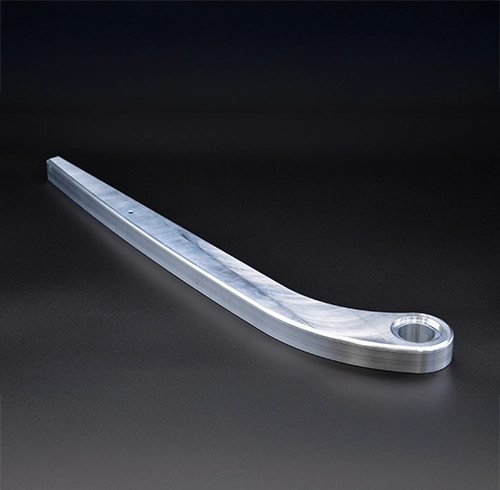
A flat machined arm with a constant thickness, a curved profile, and a single precision hole. Most features can be machined in one or two setups, making this a relatively simple component to produce.
- Approx. size: 250 mm × 30 mm × 12 mm
- Machining type: primarily 2.5D milling
- Setup complexity: low
Example Part B: Machined support bracket (complex geometry)
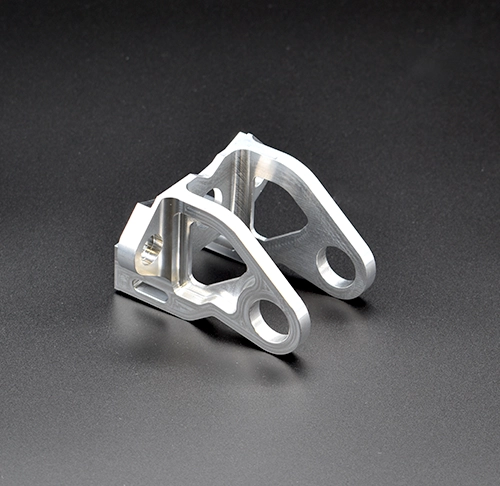
A multi-face bracket with internal pockets, multiple machined surfaces, and more complex geometry. This part requires several setups, more advanced toolpaths, and greater process control.
- Approx. size: 80 mm × 60 mm × 50 mm
- Machining type: multi-face milling
- Setup complexity: moderate to high
Indicative cost comparison
Now compare these two parts if they were ordered as a one-off vs. a batch production run, and if the material was switched from aluminium to stainless steel. Both of those choices are going to affect the final price per item.
What this comparison shows
These examples highlight how CNC machining cost is driven by a combination of material, geometry, and quantity.
A simple aluminium part can be produced efficiently, especially at batch volumes, because machining time is lower and setup effort is spread across more parts. In contrast, a more complex stainless steel component requires longer cycle times, more setups, and tighter process control, all of which increase cost.
Quantity also plays a significant role. One-off parts carry the full burden of programming and setup, while batch production distributes that effort, reducing the cost per unit.
Design mistakes that increase CNC machining cost
Many cost increases originate in the design stage rather than the machining stage.
Common examples include:
- Applying unnecessarily tight tolerances to non-critical features
- Designing deep, narrow pockets that require long tools
- Using very small internal radii that standard cutters cannot reach
- Thin unsupported walls that require slower machining speeds
- Complex geometry that forces multiple setups
- Specifying cosmetic finishes on hidden surfaces
Reviewing these elements early often reduces cost without affecting the function of the component. For example, understanding how the CNC milling process works can help engineers design features that are easier and cheaper to machine.
CNC machining cost vs other manufacturing processes
Different manufacturing processes behave very differently in cost terms.
Selecting the right manufacturing process depends on quantity, tolerance requirements, and material selection.
Please note that of these manufacturing processes, we only offer CNC machining.
Why one CNC quote can be much higher than another
Different suppliers may interpret the same drawing differently. One quote may include finishing, inspection documentation, packaging, and realistic setup assumptions. Another may exclude some of these elements.
For procurement teams, this means the cheapest quote is not always the most economical option once risk, delays, and rework are considered.
How to reduce CNC machining cost without compromising the part
Reducing machining cost usually involves simplifying the part or improving the manufacturing strategy rather than negotiating the supplier margin.
Typical approaches include:
- Relax non-critical tolerances
- Simplify geometry where possible
- Reduce the number of machining setups
- Select more machinable materials where appropriate
- Avoid unnecessary cosmetic finishes
- Plan batch quantities around realistic demand
How to compare CNC machining quotes
When reviewing machining quotes, consider more than the headline price.
Check whether:
- Material grade is clearly defined
- Quantity assumptions are consistent
- Inspection scope is stated
- Finishing processes are included
- Tooling or fixturing costs are captured
- Packaging and delivery are included
- Lead times are realistic
A transparent quote should make the cost drivers visible.

Conclusion
CNC machining cost is shaped by material, geometry, tolerances, quantity, finishing, inspection requirements, and delivery expectations. The clearest value usually comes from understanding those variables early and designing the part so it can be manufactured efficiently and repeatably.
If you are reviewing suppliers or pricing a new component, working with an experienced precision CNC machining partner can help identify cost drivers early and prevent expensive surprises later in production.
Not getting what you want from your CNC machining supplier?