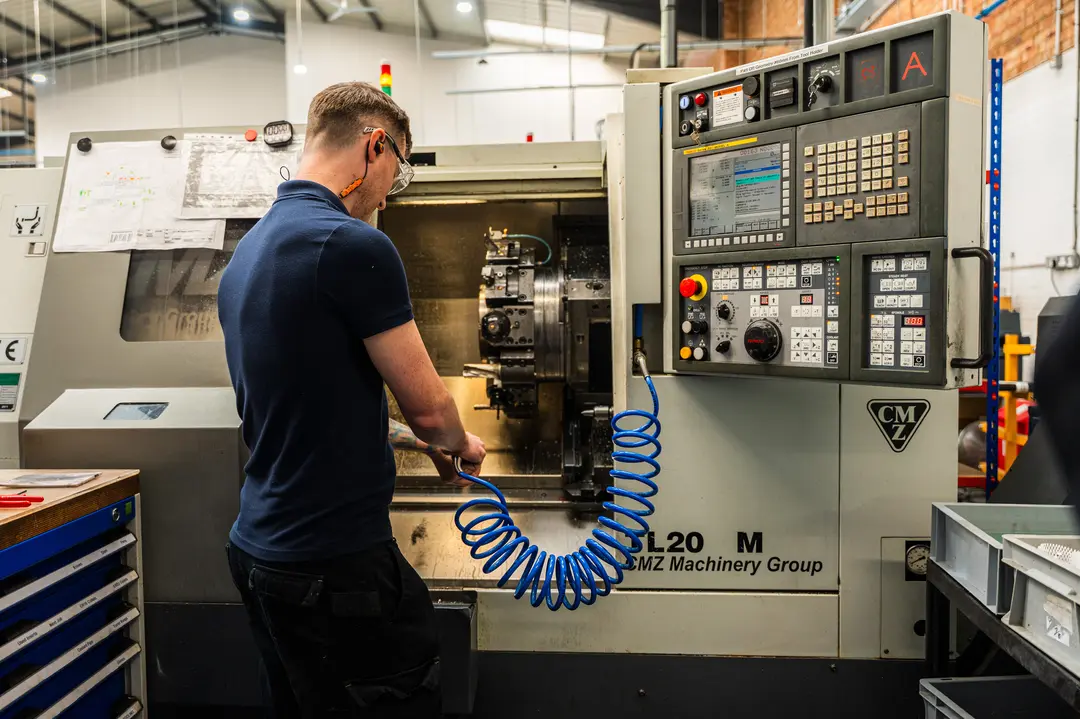

CNC turning is one of the most widely used machining processes for producing accurate round, cylindrical and rotational components. It is commonly used for parts such as shafts, bushes, spacers, pins, rollers, threaded inserts and precision fittings where repeatability, surface finish and dimensional accuracy matter.
Key takeaways
- CNC turning is best suited to round, cylindrical and rotational parts such as shafts, pins, bushes, spacers, rollers and threaded components.
- During CNC turning, the workpiece rotates while a programmed cutting tool removes material to create features such as diameters, faces, bores, tapers, grooves and threads.
- CNC turning is often more efficient than CNC milling for cylindrical components, but milling or turn-mill machining may be better for square, flat, pocketed or highly complex parts.
- Material, tolerance, surface finish, batch size, inspection requirements and secondary operations all affect cost and lead time.
- Early design for manufacture input can reduce chatter, deflection, burrs, avoidable setups and inspection issues.
Talk to CNC turning experts
What is CNC turning?
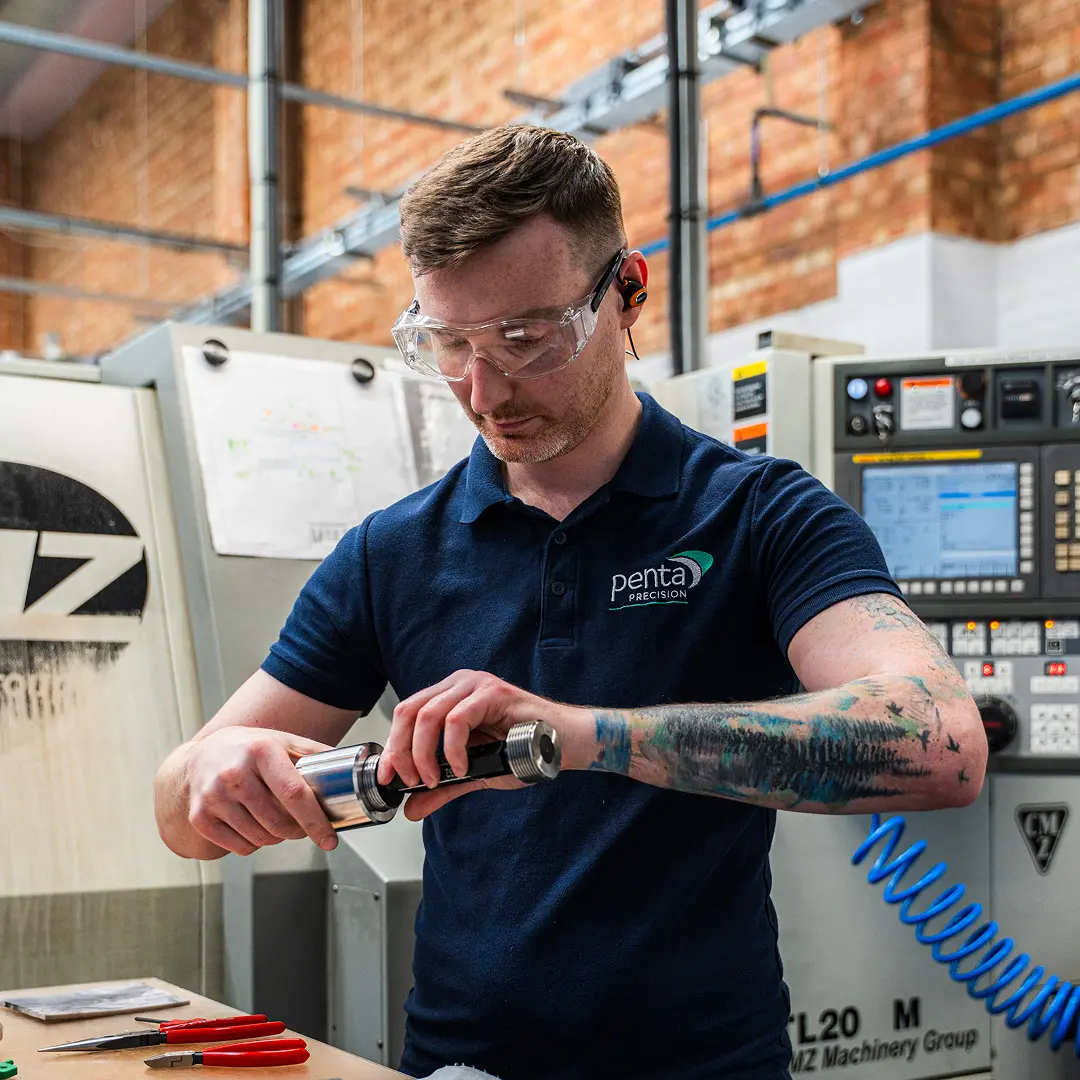
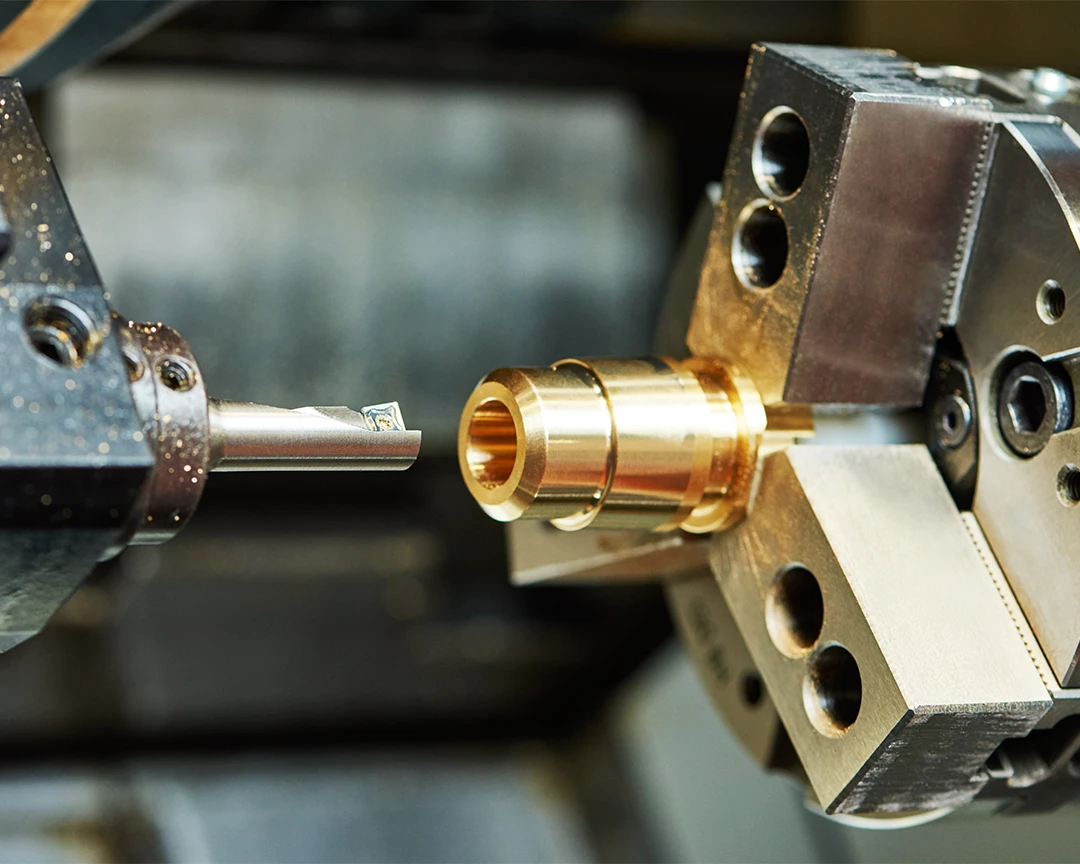
CNC turning is a subtractive machining process used to make cylindrical, round and rotational parts. During CNC turning, the material rotates in a chuck while a programmed cutting tool removes material to create features such as diameters, threads, grooves, tapers, bores and faces.
CNC stands for Computer Numerical Control. Instead of relying on manual movement from a machinist, a CNC turning machine follows a programmed toolpath created from a CAD model or engineering drawing. This allows the same component to be machined with consistent dimensions, repeatable features and controlled surface finishes.
Turning is especially useful when the main geometry of the part is rotational. If a component has concentric diameters, threaded sections, internal bores, shoulders, grooves or tapered features, CNC turning is often the most efficient process to consider.
For buyers, engineers and production teams, the value of CNC turning is not only speed. The real value is repeatability. Once a program, setup, tooling strategy and inspection method are proven, turned parts can be produced consistently across prototypes, small batches and repeat production runs.
How does CNC turning work?
CNC turning starts with a piece of raw material, usually bar stock, billet or a pre-cut blank. The workpiece is held in a chuck, collet or other workholding system and rotated at a controlled speed. A cutting tool then moves into the rotating material to remove metal or plastic until the part reaches the required size and shape.
The cutting tool does not spin in the same way as a milling cutter. Instead, the workpiece rotates and the tool is fed along controlled axes. This is what makes turning so effective for producing round external and internal features.
A typical CNC turning process includes:
- Reviewing the drawing or CAD model. The machinist or engineer checks the geometry, tolerances, material, finish requirements, thread details, datum scheme and any inspection requirements. At this stage, design for manufacture feedback may be given if the part includes avoidable complexity, unclear tolerances or features that could increase risk.
- Selecting the right machine and workholding. The part size, material, length, diameter, complexity and batch quantity influence whether a CNC lathe, turning centre, Swiss-type lathe or turn-mill machine is most appropriate. Long, slender or thin-walled parts may need additional support to reduce deflection and chatter.
- Programming the toolpath. CAM software is used to convert the design into machine instructions. The program defines tool movements, spindle speeds, feed rates, cutting depths and operation order.
- Setting up tools and material. The machine is loaded with the correct raw material and cutting tools. Tools may include turning inserts, boring bars, grooving tools, threading tools, drills, taps and parting tools.
- Machining the component. The machine removes material in controlled operations. Roughing cuts remove most of the excess material, while finishing cuts achieve the final tolerance and surface finish.
- Inspecting the part. The finished component is checked against the drawing. Depending on the part and customer requirements, this may include manual inspection, CMM inspection, thread gauging, surface finish checks or a full inspection report.
- Finishing, cleaning and despatch. If required, the component may then move into finishing processes such as anodising, passivation, plating, bead blasting, polishing or specialist cleaning. Packaging and labelling should match the order, drawing issue and goods-in requirements.
CNC turning vs CNC milling
CNC turning and CNC milling are both subtractive machining processes, but they are used for different types of geometry.
Some parts need both turning and milling. A turning centre with live tooling can machine rotational features and some milled features in one setup. This can reduce handling, improve alignment and remove the need to move the part between separate machines.
When should you use CNC turning?
CNC turning is usually the best choice when the part has a round central form or features that need to be concentric around a central axis.
You should consider CNC turning when your component includes:
Turning is also useful for repeat production because a proven program and setup can be reused. That helps control repeatability, reduce variation and support more predictable lead times across batches.

When might CNC turning not be the best choice?
CNC turning is powerful, but it is not always the most efficient manufacturing method. If the part is mainly square, flat, pocketed or irregular, CNC milling may be more appropriate.
CNC turning may be less suitable when:
- The part has little or no rotational geometry
- The main features are pockets, flat faces, slots or complex 3D profiles
- Off-axis holes, flats or milled features dominate the design
- The component has very thin walls that may deflect during cutting
- The part is long and slender, increasing the risk of chatter
- Tolerances are tighter than the function genuinely needs
- Material waste from bar stock would be excessive
- Multiple secondary setups would make the process inefficient
This does not mean the part cannot be made. It means the manufacturing route should be reviewed before quoting or production. In many cases, small design changes or a turn-mill approach can reduce cost, risk, and lead time.
Common CNC turning operations
CNC turning can create a wide range of external and internal features. The right sequence depends on the drawing, material, tolerance and surface finish requirements.
Types of CNC turning machines
Different CNC turning machines are suited to different part sizes, geometries and production requirements. Choosing the right machine affects accuracy, lead time, cost and the number of setups required.
CNC lathes
A CNC lathe is commonly used for straightforward turned components. It rotates the workpiece while controlled cutting tools remove material. CNC lathes are suitable for many cylindrical parts, including shafts, bushes, spacers and threaded components.
They are often used for prototypes, small batches and repeat production where the part geometry is primarily rotational.
CNC turning centres
A CNC turning centre is more advanced than a basic lathe. Turning centres may include driven tools, tool turrets, sub-spindles and additional axes. This allows the machine to perform turning, drilling, tapping and some milling operations in one setup.
This is useful for components that have both turned and milled features. Reducing the number of setups can improve accuracy between features, shorten handling time and simplify production flow.
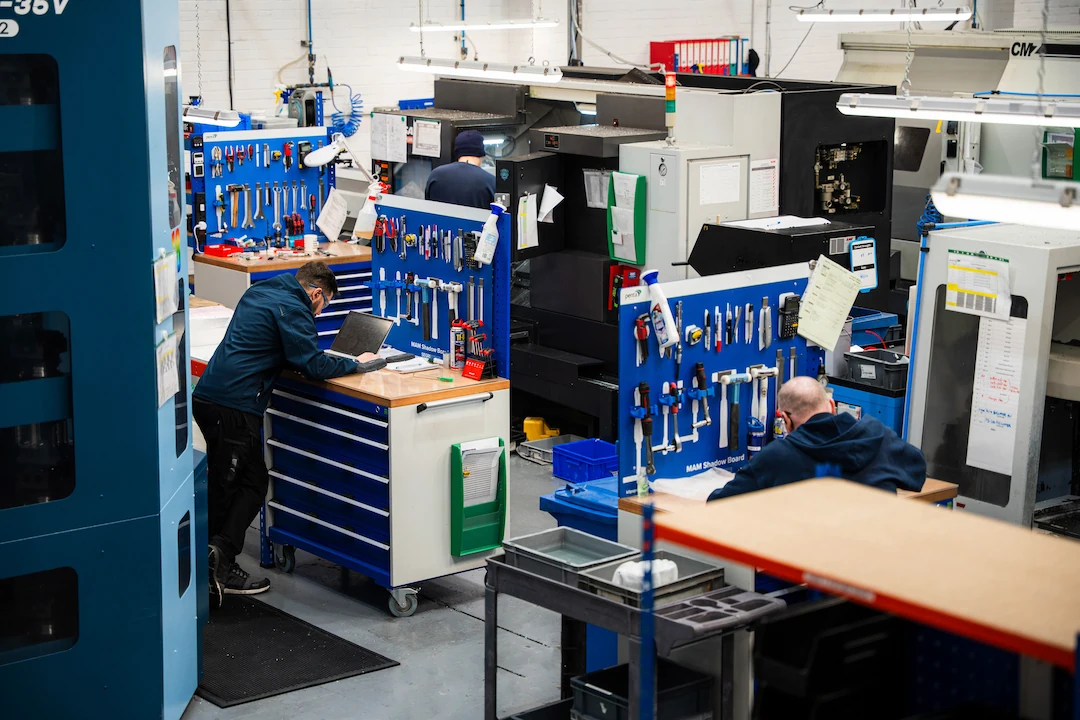
Swiss-type lathes
Swiss-type lathes are well suited to small, slender and high-precision components. The material is supported close to the cutting tool, which helps reduce deflection. This makes the process useful for long, thin parts where stability is critical.
Swiss turning is often used for medical, electronics and precision engineering components where small features and repeatability are important.
Vertical turning lathes
Vertical turning lathes are used for larger or heavier components. The workpiece is held vertically, which can improve stability for large diameters or heavy parts.
They are typically used for larger industrial components where safe handling, rigidity and access are key considerations.
Turn-mill machines
Turn-mill machines combine turning and milling capability. They are useful when a component has round features as well as flats, cross holes, slots or off-axis details.
For the right component, turn-mill machining can reduce secondary operations and improve feature alignment by completing more work in a single setup.
Materials used in CNC turning
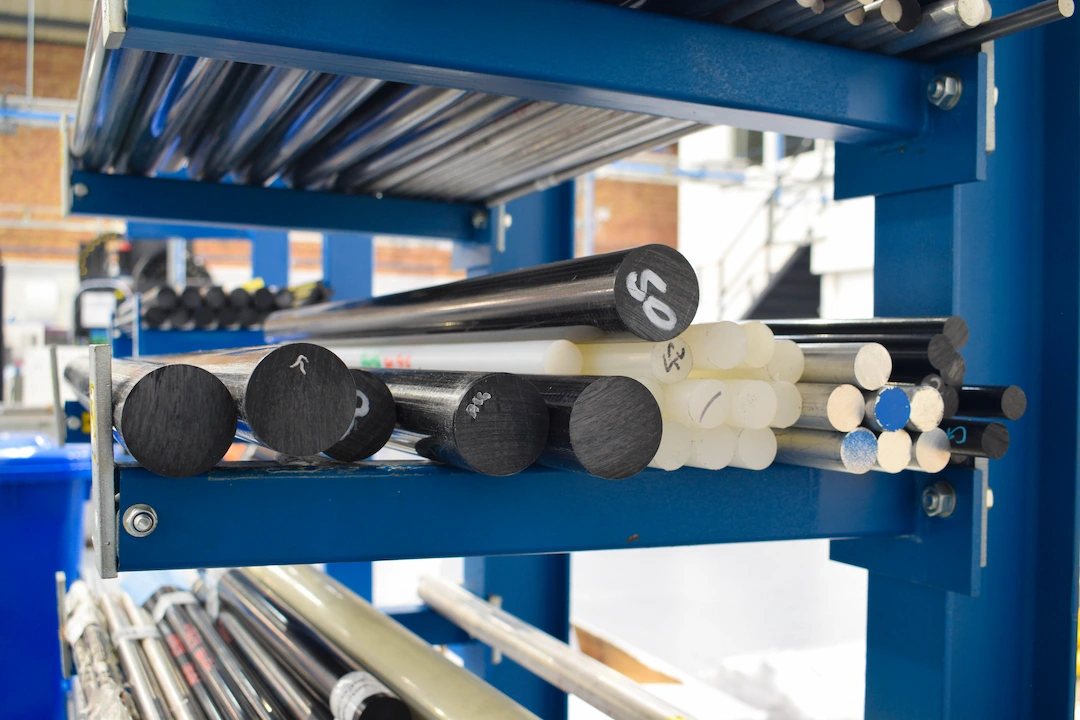
CNC turning can be used with many metals and engineering plastics. Material choice affects machinability, tool wear, surface finish, tolerance stability, corrosion resistance, strength, weight and cost.
Aluminium
Aluminium is widely used because it is lightweight, corrosion resistant and generally easy to machine. It is common in electronics, scientific equipment, aerospace, medical devices and general engineering components.
Aluminium can be an efficient choice for turned parts, but grades vary. Some grades machine cleanly, while others may be more prone to burrs or surface marking. If the component will be anodised, the material grade and cosmetic requirements should be discussed early.
Stainless steel
Stainless steel is chosen for strength, corrosion resistance and durability. It is often used for medical, marine, food, pharmaceutical and defence components.
It usually requires more careful machining than aluminium because it is tougher and can increase tool wear. Tolerances, surface finish and batch size should be considered carefully because they can influence cycle time and cost.

Brass
Brass is often used for fittings, inserts, connectors and components requiring good machinability. It can produce clean finishes and is suitable for many precision turned parts.
It is commonly selected where corrosion resistance, appearance, electrical conductivity or ease of machining are important.
Bronze
Bronze is used for bushes, bearings, wear components and marine applications. It offers useful wear resistance and corrosion resistance, but the exact grade should be matched to the application.
For sliding or bearing components, surface finish, lubrication and tolerance should be defined clearly.
Copper
Copper is used where electrical or thermal conductivity is important. It can be more challenging to machine cleanly than some other metals because it is soft and ductile.
Tooling, cutting conditions and burr control need close attention, especially for small features or fine finishes.
Titanium
Titanium is used where strength-to-weight ratio, corrosion resistance or biocompatibility are important. It is common in aerospace, medical and high-performance applications.
Titanium is more demanding to machine than aluminium or brass. It can increase tool wear, cycle time and cost, so design for manufacture input is especially valuable.
Engineering plastics
Engineering plastics such as acetal, PEEK, PTFE, nylon and other specialist polymers can be CNC turned for lightweight, insulating, low-friction or chemically resistant components.
Plastics behave differently from metals. Heat, clamping pressure and material movement can affect dimensions and finish. Sharp tools, suitable speeds and realistic tolerances are important.
What affects CNC turning cost and lead time?
A CNC turned part is not priced by size alone. The cost depends on how efficiently the part can be machined, inspected, finished and delivered to specification.
Key cost and lead time factors include:
Material choice
Material affects raw stock price, availability, tool wear, cutting speed, surface finish and risk. Aluminium is often faster to machine than stainless steel or titanium. Specialist plastics and high-performance alloys may need additional care, sourcing time or process control.
Part size and bar diameter
Larger diameters usually require more material and longer machining time. If a small finished part must be machined from a much larger bar, material waste may increase.
Tolerances
Tight tolerances require more controlled machining, inspection and process stability. This can increase cycle time, setup time and inspection time. Where a tight tolerance is function-critical, it should remain. Where it is not critical, opening the tolerance can reduce cost and risk.
Surface finish
A standard machined surface finish is usually faster than a fine cosmetic or sealing finish. If a specific surface roughness is required, it should be stated on the drawing. The machining route may need finishing passes, polishing or post-processing.
Feature complexity
Threads, grooves, deep bores, thin walls, undercuts, cross holes and off-axis features can increase machining time. Complex parts may need a turning centre or secondary milling operation.
Batch quantity
One-off prototypes carry more setup time per part. Repeat batches can spread setup time across more components and may benefit from proven tooling, fixtures and inspection plans.
Inspection requirements
Basic dimensional checks are faster than full inspection reports, CMM reports, FAIR documentation or customer-specific quality packs. If inspection evidence is required at goods-in, it should be agreed before production.
A simple dimensional check may only add a small amount of inspection time once the part is machined. By comparison, a CMM report or FAIR can add extra review, programming, inspection and documentation time, especially if the report needs to match a customer format or specific drawing issue. For time-sensitive projects, confirm the inspection scope early so it can be planned into the lead time rather than added after machining.
Finishing and post-processing
Anodising, passivation, plating, bead blasting, polishing, heat treatment, cleaning and special packaging can all add lead time. Finishing requirements should be considered alongside tolerances because some finishes can affect dimensions or appearance.
As a practical guide, finishing often adds 2–3 weeks to the overall lead time, depending on the finishing process, supplier capacity, masking requirements and inspection needs. If a part needs both machining and finishing, confirm this at quote stage so the delivery date reflects the full process rather than machining time alone.
Urgency
Short lead times may require capacity planning, split deliveries or simplified finishing routes. A realistic discussion early in the project helps avoid late surprises.
We're ready to help you with your project.

Design tips for CNC turned parts
Good CNC turning design helps reduce cost, improve repeatability and minimise production risk. The best time to improve manufacturability is before the drawing is released for quote or manufacture.
Keep tolerances functional
Apply tight tolerances where they affect fit, function, sealing, alignment or safety. Avoid applying tight tolerances across every diameter by default. Over-tolerancing can increase machining and inspection time without improving the part’s performance.
Define critical features clearly
If a diameter, bore, thread, shoulder or face is critical, make that clear on the drawing. This helps the machining team plan the process, choose suitable tooling and inspect the right features properly.
Avoid unnecessary sharp internal corners
Cutting tools have a physical radius. Sharp internal corners can require specialist tooling, extra operations or EDM depending on the design. Adding realistic radii can make a part easier and more reliable to machine.
Consider wall thickness
Thin walls can move, vibrate or distort during turning. If a part includes thin sections, discuss the geometry early. A small design change can sometimes reduce chatter and improve stability.
Think about long, slender parts
Long, slender turned parts can deflect under cutting forces. Support methods, reduced cutting forces, alternative material stock or design changes may be needed to hold tolerance consistently.
Specify threads fully
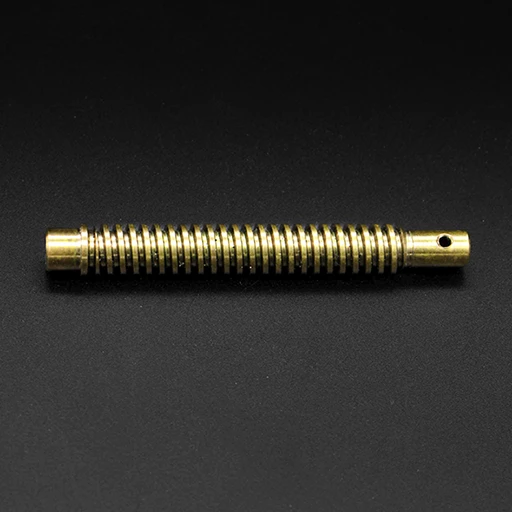
For threaded features, define the thread type, pitch, depth, class and any gauge requirements. Ambiguous thread details can delay quoting, machining and inspection.
Define surface finish only where needed
Surface finish requirements should be linked to function. For example, sealing faces, bearing surfaces and cosmetic faces may need specific finishes. Non-critical areas may not need the same requirement.
Include deburring and edge break requirements
Burrs can cause assembly, safety, cleanliness and quality issues. If specific edges must be broken, left sharp or kept burr-free, state this clearly.
Consider finishing from the start
If the part will be anodised, passivated, plated, bead blasted or polished, discuss this early. Finishing can affect appearance, masking requirements, handling marks and sometimes dimensions.
Share the real application
A drawing tells the machinist what to make. Application context helps them understand what matters. If a part is used as a sealing face, bearing surface, alignment feature or cosmetic component, say so. This helps prevent avoidable assumptions.
Common CNC turning problems and how to reduce them
CNC turning is highly repeatable when the design, material, setup and inspection plan are right. Most problems can be reduced by identifying risk early.
Benefits of CNC turning
CNC turning offers several practical advantages for engineering, procurement, quality and production teams.
High repeatability
Once the programme and setup are proven, CNC turning can produce consistent parts across a batch. This supports predictable quality and helps reduce variation in repeat orders.
Efficient production of round parts
For cylindrical components, CNC turning can be faster and more efficient than milling. The rotating workpiece allows diameters, faces, grooves and threads to be produced cleanly and repeatedly.

Good surface finishes
CNC turning can achieve high-quality machined finishes, especially on external diameters and faces. With the right tooling and cutting strategy, it can produce functional surfaces for sealing, sliding, locating and assembly.
Suitable for prototypes and repeat batches
CNC turning can be used for one-off parts, prototypes, development batches and repeat production. This makes it useful from early design validation through to more stable production.
Strong dimensional control
Turning is well suited to controlling diameters, concentric features and roundness when the setup is planned correctly. This is especially valuable for shafts, bushes, sleeves and mating components.
Reduced setup through turning centres
Where a turning centre has live tooling, some milled features can be added without moving the part to another machine. This can improve alignment between features and reduce handling.
Broad material compatibility
CNC turning supports aluminium, stainless steel, brass, bronze, copper, titanium and many engineering plastics. The best material depends on strength, corrosion resistance, weight, conductivity, finish, compliance and cost requirements.
Limitations of CNC turning
A helpful manufacturing decision should include the drawbacks as well as the benefits. CNC turning is a strong process, but it has limits.
It is best for rotational parts
If the part is mainly square, flat or pocketed, CNC milling may be more efficient. Turning works best when most of the geometry is arranged around a central axis.
Some features may need secondary operations
Cross holes, flats, slots and off-axis features may require live tooling, turn-mill machining or a separate milling operation. This can affect cost and lead time.
Thin walls can be challenging
Thin-walled turned parts can vibrate, distort or move during machining. These parts may need careful workholding, lighter cuts or design changes.
Long parts can deflect
Long, slender parts can bend under cutting pressure. Support and process planning are essential when length-to-diameter ratio becomes a concern.
Material waste can be a factor
Turning removes material from bar stock or blanks. If the final part is much smaller than the starting material, waste can increase.
Tight tolerances increase process demands
Very tight tolerances may be achievable, but they need the right material, machine, tooling, setup and inspection approach. Applying tight tolerances unnecessarily can increase cost without improving function.

CNC turning tolerances and inspection
Tolerance capability depends on the material, geometry, machine, tooling, setup, feature type and inspection method. A simple aluminium spacer, for example, will behave differently from a thin-walled stainless steel sleeve or a long titanium shaft.
When specifying tolerances, consider:
- Which features are function-critical
- Which diameters mate with other parts
- Which surfaces are cosmetic or functional
- Whether the part needs thread gauges
- Whether bores need specific roundness or alignment
- Whether the drawing uses GD&T
- Whether the part needs CMM inspection or a formal report
- Whether repeat batches need the same inspection scope each time
For quality-critical components, inspection planning should happen before manufacture. This reduces the risk of goods-in delays and helps ensure the inspection evidence matches the customer’s expectations.
CNC turning for prototypes and production
CNC turning can support both development work and repeat production, but the priorities differ.
Prototype CNC turning
For prototypes, the focus is usually speed, design validation and practical feedback. A prototype may help confirm fit, function, material choice, assembly, thread engagement or sealing performance.
At this stage, it is useful to ask:
- Does the design machine cleanly?
- Are the tolerances realistic?
- Are any features causing avoidable cost?
- Does the selected material behave as expected?
- Are there burr, finish or assembly concerns?
- Will the design scale into repeat production?
Production CNC turning
For repeat production, the focus shifts towards stability, repeatability, inspection, documentation and delivery performance.
At this stage, it is useful to agree:
- Batch size and call-off pattern
- Critical features and inspection frequency
- Material certification needs
- Surface finish and post-processing requirements
- Packaging and labelling requirements
- Drawing issue control
- Delivery schedule and forecast visibility
- Any FAIR, CMM or customer-specific quality documentation
A strong production process is not only about machining the part correctly once. It is about producing the same part reliably across future batches.
What information should you send for a CNC turning quote?
The more complete the information, the more reliable the quotation. Missing details often lead to assumptions, delays or price changes later.
For a CNC turning quote, send:
- 2D engineering drawing
- 3D CAD model if available
- Material grade
- Required quantity
- Tolerances
- Surface finish requirements
- Thread details
- Finishing or post-processing requirements
- Inspection and documentation requirements
- Target delivery date
- Application context if relevant
- Drawing issue or revision number
- Any packaging, labelling or goods-in requirements
If the design is still in development, say so. A good machining partner can provide feedback before the drawing is finalised.
How to choose a CNC turning supplier
Choosing a CNC turning supplier is not only a question of machine capacity. The right supplier should be able to understand the drawing, identify risk, machine the part consistently, inspect it properly and communicate clearly.
If you are reviewing your current supplier because of late deliveries, quality issues or poor communication, our guide, When and how to change your CNC machining supplier: A Buyer’s Guide, can help you assess whether switching supplier is the right next step.
Want to change suppliers with no risk to supply chain?

When reviewing a supplier, consider:
Machining capability
Check whether the supplier can handle the material, size, tolerance and geometry required. Ask whether similar parts have been produced before and whether the supplier can advise on manufacturability.
Design for manufacture input
A good supplier should highlight practical improvements before production. This might include tolerance review, material advice, thread clarification, wall thickness concerns, finishing risks or opportunities to reduce setups.
Inspection capability
For precision components, inspection should be planned. Ask what inspection equipment is available and whether reports, CMM data, FAIR documentation or customer-specific inspection packs can be supplied if needed.
Quality management
Look for evidence of a controlled process, drawing issue control, material traceability, clear documentation and a quality management system. For many buyers, ISO 9001 accreditation is an important supplier signal.
Communication
Reliable communication reduces stress for procurement, engineering, operations and quality teams. The supplier should be clear about lead times, risks, assumptions, progress and recovery plans if something changes.
Finishing and secondary operations
If your turned part needs anodising, passivation, plating, bead blasting or other finishing, ask how the supplier manages this. A single point of accountability can reduce admin and schedule risk.
Repeat production support
If the part will move from prototype to repeat batches, ask how the supplier handles process stability, repeatability, documentation, inspection and future call-offs.
Why work with Penta Precision for CNC turning?
At Penta Precision, we support customers who need accurate CNC machined components without unnecessary friction. Our team works with procurement leads, design engineers, production specialists, quality teams, operations managers and business owners who need a machining partner they can rely on.
We can support you with:
- CNC turning
- CNC milling
- 5-axis CNC machining
- Design for manufacture feedback
- Prototype machining
- Repeat production
- Material guidance
- Finishing support through trusted partners
- Inspection and quality documentation
- Clear communication from enquiry to delivery
Our approach is built around making precision manufacturing straightforward, reliable and consistent. That means reviewing requirements carefully, identifying risks early and helping customers make informed manufacturing decisions before problems reach the shop floor.
In conclusion
CNC turning is one of the most effective ways to produce accurate round, cylindrical and rotational components. It is especially valuable for parts such as shafts, pins, bushes, spacers, inserts, rollers and threaded components where repeatability and dimensional control are important.
The best results come from choosing the right material, applying tolerances carefully, defining critical features clearly and reviewing manufacturability before production begins. A well-planned CNC turning process can reduce cost, improve quality and support reliable delivery from prototype through to repeat batches.
At Penta Precision, we help customers make CNC turning straightforward by combining machining expertise, quality control, practical design feedback and clear communication. If you are developing or sourcing a CNC turned component, our team can review your requirements and help you move forward with confidence.