
If you’re wondering how to choose a CNC supplier — or questioning whether your current CNC supplier is still the right fit — the warning signs usually show up long before a “big failure”.
Most problems start quietly: a delivery date that shifts without much notice, a quality issue that gets reworked and shipped, an update that only arrives after you ask. On their own, these feel manageable. Over time, they create missed milestones, heavier inspection load, and growing doubt about whether commitments can be trusted.
This article breaks down five red flags in a CNC supplier and, more importantly, how to spot them early using practical checks that apply across real CNC machining environments.
Key takeaways
- CNC supplier issues usually show up as patterns, not one-off events
- Communication problems are often an early indicator of delivery risk
- Repeated delivery slips tend to reflect planning discipline and capacity control
- Strong quality systems are visible through consistent inspection evidence and documentation (e.g., FAIRs)
- When quality issues recur, the key question is what changed to prevent recurrence
- Unclear pricing often results in friction later — especially where instant AI-generated quotes are revised after an actual human reviews them, sometimes even after the order is placed, making it too late to shop around elsewhere.
- The true cost of a CNC supplier shows up in time, coordination, and disruption, not only unit price
- Most of these risks can be identified during quoting and early onboarding
Red flag 1: Poor communication and lack of ownership
In CNC machining, poor communication usually looks like ambiguity rather than silence. Most CNC suppliers respond to emails. The difference is whether you ever feel you need to chase to get a straight answer.
A good CNC supplier relationship feels simple: you place the work, you get a credible delivery date, and the parts arrive as agreed. Communication supports that simplicity. The red flag appears when clarity disappears and you start managing the supplier instead of the project.
What this looks like in practice
You’ll see it in behaviours like:
- Material grades being substituted or clarified late in the process, with certification only discussed after you ask
- Manufacturability concerns (tight tolerances, thin walls, deep cavities) raised after programming or first-off inspection rather than at quotation stage
- Delivery dates shifting due to tooling, workholding or capacity constraints that were not flagged early
- Inspection results described as “within tolerance” without clear data, reports, or consistent messaging from the team
- Non-conformances explained vaguely (“minor issue”, “just reworking it”) without a defined corrective action or revised commitment date
Instead of early technical conversations, you get reactive updates. Instead of clear ownership, you get partial information.
Over time, this creates a subtle but important shift: you stop trusting the process and start double-checking details that should already be under control.
Why this matters in CNC machining
CNC parts sit inside bigger timelines: assemblies, production builds, customer shipments, service commitments. When ownership is unclear, teams compensate. Buffers get added. Checks increase. Planning becomes defensive. The hidden cost is the overhead of managing uncertainty.
A simple test
If you’ve had to ask “Can you confirm we’re still on track?” more than once on the same order, treat that as a signal. A reliable CNC supplier makes it easy to hand over work and trust the commitment date without constant follow-up.
Red flag 2: Delivery delays that become predictable
Every CNC machining company encounters disruption. The warning sign is when delays stop being exceptions and start becoming a normal feature of the relationship.
The key point isn’t that a date moved once. It’s whether delivery commitments hold up consistently across orders.
What this looks like in a CNC environment
You might notice:
- Partial shipments becoming common rather than exceptional
- The same types of parts consistently running late
- Lead times that feel optimistic at quote stage but expand in practice
In many cases, the issue isn’t effort. It’s planning.
CNC capacity is finite. Machine time, skilled labour, inspection bandwidth, and finishing slots must be balanced. When a supplier regularly accepts work beyond what their system can support, delivery reliability becomes the pressure valve.

The underlying causes
Repeated delivery delays typically point to one of three structural problems:
1. Capacity misalignment
Too much work booked against available machine time or inspection resource.
2. Inaccurate lead time quoting
Lead times based on ideal conditions rather than real shop-floor loading.
3. Weak recovery discipline
When something slips, there’s no formal replanning — just hope that the schedule absorbs it.
A reliable CNC supplier recognises that disruption happens and plans for it accordingly so end dates are unaffected from quote stage to delivery.
A clearer decision threshold
Look at the last six months of orders. If multiple deliveries required date changes after confirmation, you’re looking at a pattern, not noise — especially if the causes sound similar each time. Patterns are what break schedules.
Red flag 3: Weak or inconsistent quality systems
Many CNC supplier relationships break down because the quality system behind the parts is unclear, inconsistent, or reactive. The machining might be capable, but the evidence, discipline, and traceability don’t hold steady over time.
A CNC supplier should be able to show control, not just claim it.
What this looks like in CNC machining
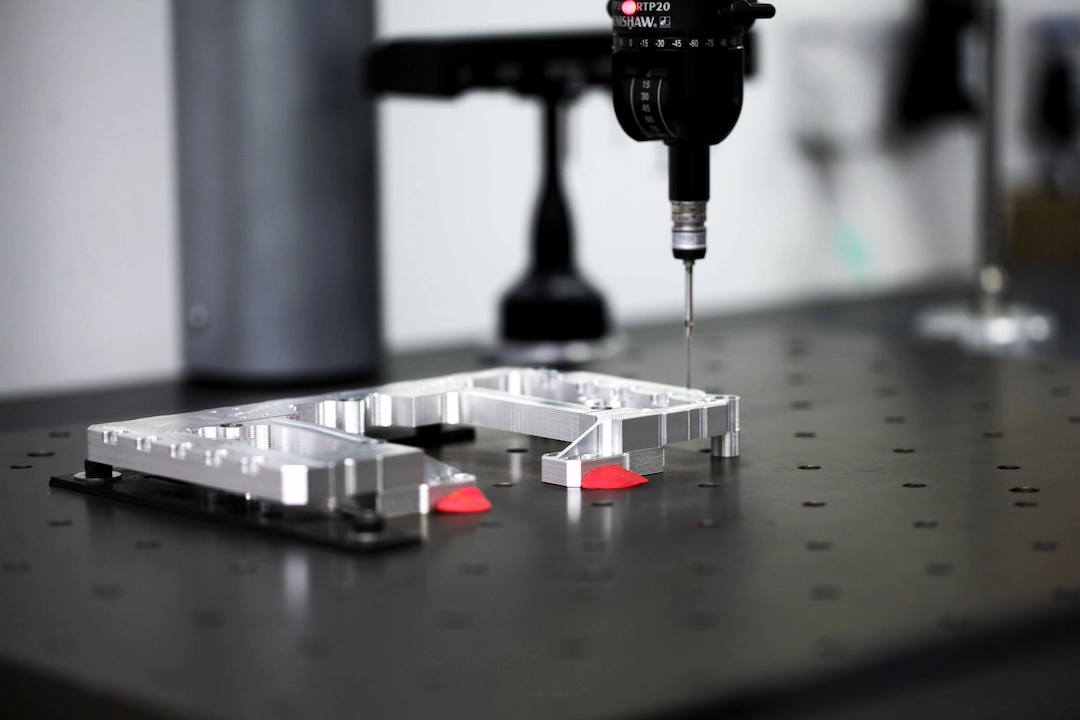
You’ll often see missing or superficial certifications, inspection that happens only at the end, or documentation that changes from order to order. More specifically, issues surface when a CNC supplier cannot consistently provide or explain standard quality artefacts such as First Article Inspection Reports (FAIRs), defined inspection methods (what is checked, how often, and how results are recorded),change and revision control, and inspection evidence that can be interpreted later.
Why this matters
Weak systems don’t just create scrap. They create friction: parts spend more time at your incoming inspection department to check quality, goods-in delays caused by incomplete paperwork, and audit stress when records cannot be produced quickly and confidently.
You don’t need every control on every job. You do need a supplier who can clearly explain what’s used, when, and why. In most well-run CNC environments, that includes ISO 9001 (and AS9100 where applicable), FAIRs when required, CMM inspection where geometry warrants it, sampling plans for repeat work, consistent Certificates of Conformity and traceability, and documented control of revisions and deviations.
The real red flag
A capable CNC supplier will ask detailed questions about your quality requirements — that is part of doing the job properly.
The real issue arises when they cannot clearly explain their own inspection process, documentation controls, and traceability standards. If their system feels improvised or inconsistent, you’ll end up compensating with more checks, more emails, and more oversight.
Red flag 4: Inconsistent quality without evidence of improvement
Variation happens in machining. Tool wear, fixture setup, thermal movement, and material behaviour all influence results. A single nonconformance can be handled. The concern is when similar issues return and nothing in the process appears to evolve.
What this looks like in CNC machining
You may see repeat drift on the same features across batches, intermittent gauge failures on threads, fluctuating cosmetics after finishing, or critical dimensions that depend on frequent offset correction to stay acceptable. Parts may still ship on time, with rework or extra inspection handled internally — but the hidden effort adds cost, strains capacity, and eventually shows up in future pricing or delivery performance.
Why this matters
This kind of inconsistency creates gradual drag: incoming inspection grows “just in case”, assemblies are built more cautiously, confidence declines, and time gets spent verifying stability instead of progressing work. The operation adapts around instability and that becomes the norm.
The real red flag
The question is simple: did anything change after the issue occurred? In a controlled CNC environment, recurring problems lead to deliberate adjustments — workholding, toolpath strategy, cutting parameters, tool selection, in-process inspection frequency, or updates to the control plan for repeat work. Rework fixes the batch. Process improvement prevents recurrence.
Is Your CNC Supplier Reducing Risk — Or Managing Around It?
Red flag 5: Pricing that looks clear at first — but shifts later
Price matters, but stability matters more. In CNC machining, pricing is tightly linked to technical variables: setup time, cycle time, material grade, tolerance bands, surface finish requirements, inspection scope, and batch size. When those variables aren’t properly evaluated during quoting, misalignment tends to showup later.
What this looks like in CNC machining
A quote may look competitive, then change once production starts because additional setups were needed, inspection requirements were heavier than assumed, or the geometry introduces machining risk that wasn’t factored at first pass.
A common driver here is instant, AI-generated quoting. These systems can be useful for speed, but they often rely on assumptions about setup complexity, tolerance impact, and cycle time. When a human estimator reviews the part properly, they may spot factors the automated quote did not capture. The result is a revised price, added charges, or an uncomfortable reset after expectations have already formed.
Why this matters
When pricing shifts mid-stream, the impact goes beyond the invoice. It can delay approvals, disrupt purchase orders, and weaken confidence — even if the final price is technically justified. Commercial stability reflects technical clarity.
The real red flag
The real issue is pricing that cannot be explained in machining terms or defended against predictable changes. A capable CNC supplier should be able to articulate what drives cost and what would cause the price to move, such as drawing revisions, tighter tolerances, reduced batch sizes, or added inspection and certification requirements.
Extremely low pricing without a clear technical explanation is also a warning sign. In CNC machining, cost is tied directly to setup time, cycle time, tooling, inspection, and material behaviour. If a quote appears significantly below realistic machining costs, something is usually being underestimated, omitted, or compromised.
When a quote behaves like a black box — or looks too good to reflect the real work involved — uncertainty is already built into the relationship.
The hidden costs behind these red flags
The biggest costs of a problematic CNC supplier rarely sit in the unit price. They show up in rescheduling, chasing, extra inspection, expediting, and management time spent resolving avoidable issues. That overhead becomes normalised, then accepted —until it’s too large to ignore.
How to spot red flags early
Most of these warning signs appear before production begins. Quoting behaviour, response clarity, and documentation discipline are reliable predictors of how the relationship will feel under pressure.
If you want a simple approach: look for suppliers who ask good questions, set realistic commitments, and provide consistent evidence. Be cautious of optimism without specificity. Where the part or programme is critical, request sample inspection evidence(for example, a redacted FAIR) and confirm what will be supplied as standard.
What to look for in a reliable CNC supplier
A reliable CNC supplier reduces friction. Delivery dates are credible. Communication is clear and owned. Inspection evidence and documentation are consistent. Pricing aligns with the real manufacturing plan. When issues arise, recovery is handled early and responsibly.
That combination is what makes a supplier easy to trust.
Want a step-by-step guide to changing your CNC machining supplier?

Conclusion
Choosing a CNC supplier is a decision about reliability over time, not performance in ideal conditions. Most supplier relationships weaken through patterns: unclear ownership, delivery slips that become expected, reactive quality systems, recurring variation, or pricing that shifts after the technical reality is understood.
If you’re evaluating a CNC supplier, use these five red flags as a practical reference. Look for repeat behaviours, not isolated events. Ask for clarity in machining terms. Pay attention to how the supplier protects commitments when conditions change.
In CNC machining, dependable outcomes come from disciplined processes, realistic planning, and clear accountability from the start.