
Instant CNC quotes are useful when you need fast budget pricing for simple parts, but human-reviewed CNC quotes are usually safer when tolerances, finishing, inspection evidence, repeatability, or production delivery matter.
If you have ever sent the same drawing to several CNC machining suppliers and received very different prices back, the difference often has less to do with hourly machine rates and more to do with how much preparation happened before production began.
One CNC quote may arrive within minutes and look attractively low. Another may take longer, cost more, and come back with questions about tolerances, datums, surface finish, inspection requirements, or geometry.
On the surface, both suppliers are quoting the same part. But In reality, they may be quoting very different assumptions about how the part will actually be manufactured.
Key takeaways
- A CNC machining quote is not only a price. It reflects assumptions about geometry, tolerances, fixturing, inspection, finishing, production stability, and manufacturing risk.
- Instant quoting platforms are useful for simple prototype parts and early-stage pricing.
- Human-reviewed CNC quotes become more important when tolerances, finishing, repeatability, or production risk matter.
- The safest quote is rarely the fastest one. It is usually the quote where the manufacturing route, inspection approach, and downstream risks have been properly reviewed before production begins.
- A higher quote is not automatically more accurate. The important question is whether the supplier has properly assessed what the part requires in real manufacturing conditions.
Not sure whether your part needs a rapid estimate or a deeper engineering review?
Send us your drawing and our engineers will review the tolerances, geometry, finishing requirements, and production risks before quoting.
Why CNC machining quotes vary so much
CNC machining quotes vary because each supplier makes different assumptions about how the part will be machined, held, inspected, finished, and repeated across production.
A part might look straightforward in CAD, but the quoted cost depends on practical manufacturing decisions such as:
- which faces will be used as datums
- how many set-ups are required
- whether tolerances are realistic for the specified material
- whether finishing affects the final dimensions
- how the part will be held securely during machining
- what level of inspection evidence is expected
- whether the part is intended for a one-off prototype or repeat production
These manufacturing decisions are often the biggest reason CNC machining prices vary between suppliers. If you want a deeper breakdown of how material, tolerances, setup time, inspection, and batch size affect pricing, read our guide to how much CNC machining costs.
This is where CNC quotes start to diverge.
Some suppliers rely heavily on automated quoting systems which process the uploaded geometry directly with minimal human review.
Others involve engineers who review the drawing in detail, question potential risks, assess manufacturability, and consider whether the proposed route will hold tolerance and quality consistently across production.
The result is that two CNC machining quotes can appear similar at first glance while carrying very different levels of manufacturing confidence.
A CNC quote is more than a number
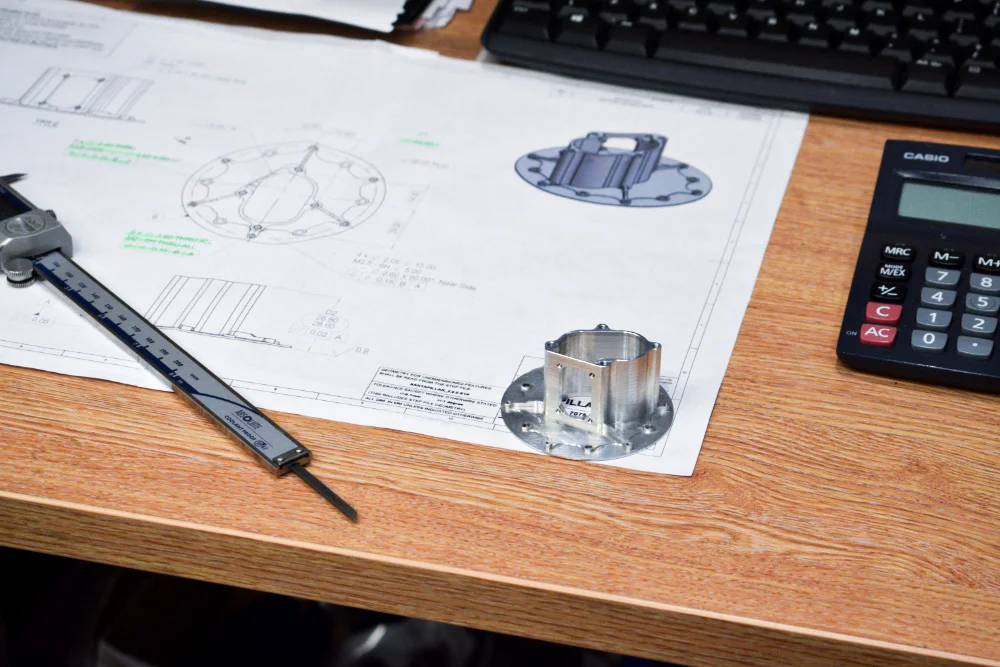
A CNC quote is more than a number because it reflects the supplier’s assumptions about material, set-ups, tolerance risk, tooling, inspection, finishing, lead time, and production stability.
When an experienced engineer reviews a CNC quote, they are usually assessing several practical factors which influence how reliably the part can be manufactured.
This often includes:
- geometry complexity and tool access
- achievable tolerances by feature and material
- number of operations and set-ups
- fixturing and workholding stability
- surface finish requirements before and after coating
- inspection method and reporting requirements
- repeatability across batches
- production stability at volume
An algorithm can calculate quickly. A human reviewer can ask whether the manufacturing route is likely to work consistently in real production.
That difference matters most when the cost of failure is high.
For Procurement teams, a delayed delivery, tolerance issue, or production escape often creates more internal disruption than the original price difference between suppliers.
Instant CNC quotes vs human-reviewed CNC quotes
The main difference is that instant CNC quotes prioritise speed, while human-reviewed CNC quotes assess the drawing, process route, tolerances, finishing requirements, and manufacturing risks before confirming the price.
Instant quoting platforms openly position speed as their primary advantage. Companies such as Xometry and Protolabs allow users to upload CAD files and receive rapid CNC machining quotes with automated feedback.
That speed has clear value.
For simple prototype parts, early-stage development work, or rough budget estimates, instant CNC quotes are often an efficient option. The difference appears when the part becomes production-critical. At that stage, the question changes.
The challenge is no longer: “How quickly can this be priced?”
It becomes: “Will this process work consistently without creating problems later?”
A human-reviewed CNC quote usually slows down at the exact point where a supplier starts assessing manufacturing risk properly. That work often includes checking the drawing for anything unclear, checking how the dimensions add up, considering the actual machining route, and deciding whether the quoted method can hold tolerance and quality across the required.
That is why human-reviewed quotes are often more technically serious quotes.
Prototype pricing vs production pricing
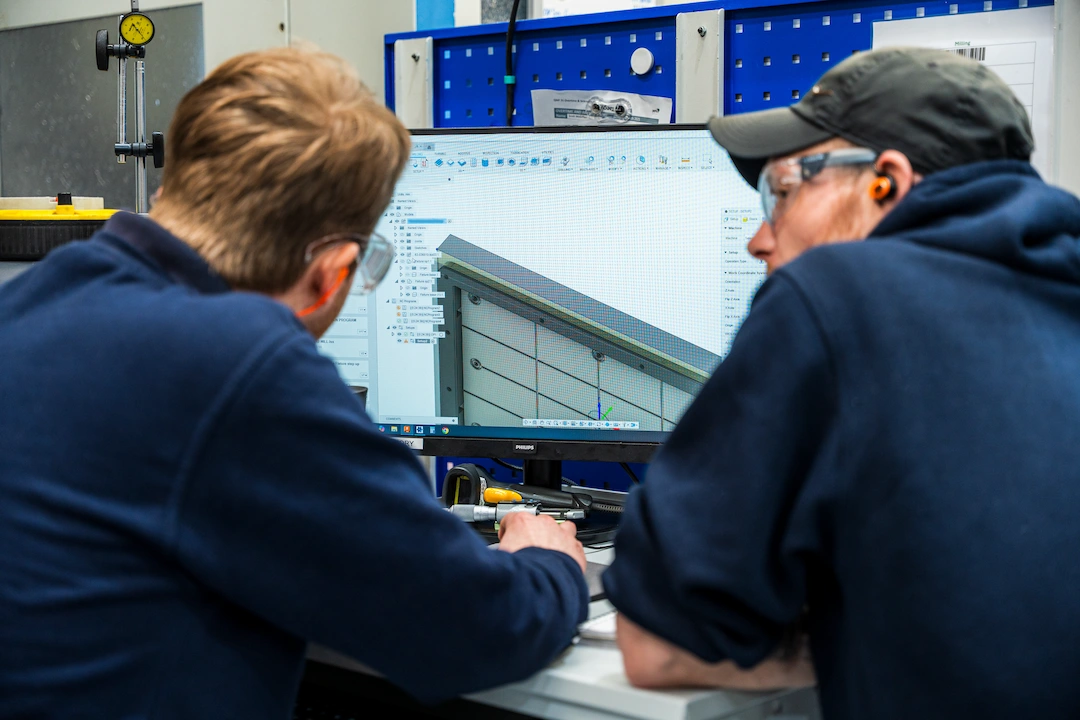
Prototype pricing usually focuses on producing a small number of parts quickly, while production pricing must account for repeatability, process control, inspection consistency, tooling wear, and batch-to-batch stability.
This distinction is often overlooked. Many instant quoting systems are strongest when pricing prototype work. Prototype manufacturing is usually focused on producing a small number of parts quickly. Some level of manual adjustment, additional inspection, or process inefficiency is often acceptable.
Production manufacturing is different. Once a part moves into repeat batches, stability becomes more important than speed. The supplier now needs to think about production factors like process repeatability, fixture consistency, tooling wear, cycle-time stability, inspection repeatability, finishing consistency or variation between batches to name a few.
A process that works once does not always work reliably across fifty, five hundred, or five thousand parts. That is where more detailed human review starts adding value.
Where instant CNC quotes can miss important details
Instant CNC quotes can miss important details when the CAD model or drawing does not fully explain functional requirements, datum schemes, inspection expectations, finishing effects, or critical features.
A drawing can appear complete while still leaving important manufacturing questions unanswered.
For example, imagine a plate with four holes that must align precisely with another assembly. The drawing shows their positions, but does not clearly define the datum or reference face.
An instant quoting system will typically price this straight from the model. It assumes the geometry is correct and does not question how those holes will be aligned in reality. A human reviewer is more likely to stop and assess how the part will actually function in assembly.
You see the same issue with notes like “deburr all edges” or general surface finish requirements. An instant quote will usually treat this as a standard step. A human will ask which edges actually matter, whether any faces are critical for sealing or fit, and whether extra care is needed.
The difference is straightforward.
The instant quote processes the geometry. The human reviewer assesses whether the part is likely to work reliably in the real manufacturing environment.
Where tolerances change the manufacturing route
Tolerances can change the manufacturing route because tighter or function-critical dimensions may require different tooling, additional set-ups, more stable fixturing, slower machining, or extra inspection.
Tolerances do not only affect inspection time. They often change how the part needs to be machined.
An instant quoting system will usually take the tolerance values at face value. It does not question whether they are tight for a reason, how they relate to other features, or what it takes to hold them consistently.
A human reviewer will look at the same drawing and ask practical questions. Which tolerances are function-critical? Which ones drive process complexity? Which features are likely to move during machining? Are any additional operations are required? And more importantly, whether the specified tolerance is realistic for the material, geometry and the specific use case of the component.
For example, thin walls, deep pockets, and long unsupported features often behave differently once material removal begins. This is where cheaper quotes can go wrong. The instant quote assumes everything will run smoothly. The human is thinking about what could go wrong and pricing that risk in.
Those decisions influence:
- cost
- repeatability
- scrap risk
- delivery reliability
- batch stability
This is often where Design for Manufacture support becomes valuable, especially for thin walls, deep pockets, and tolerance-critical features.
A lower CNC quote can still be correct. But only if the proposed manufacturing route will reliably hold those tolerances in practice.
How manufacturing strategy affects the quote
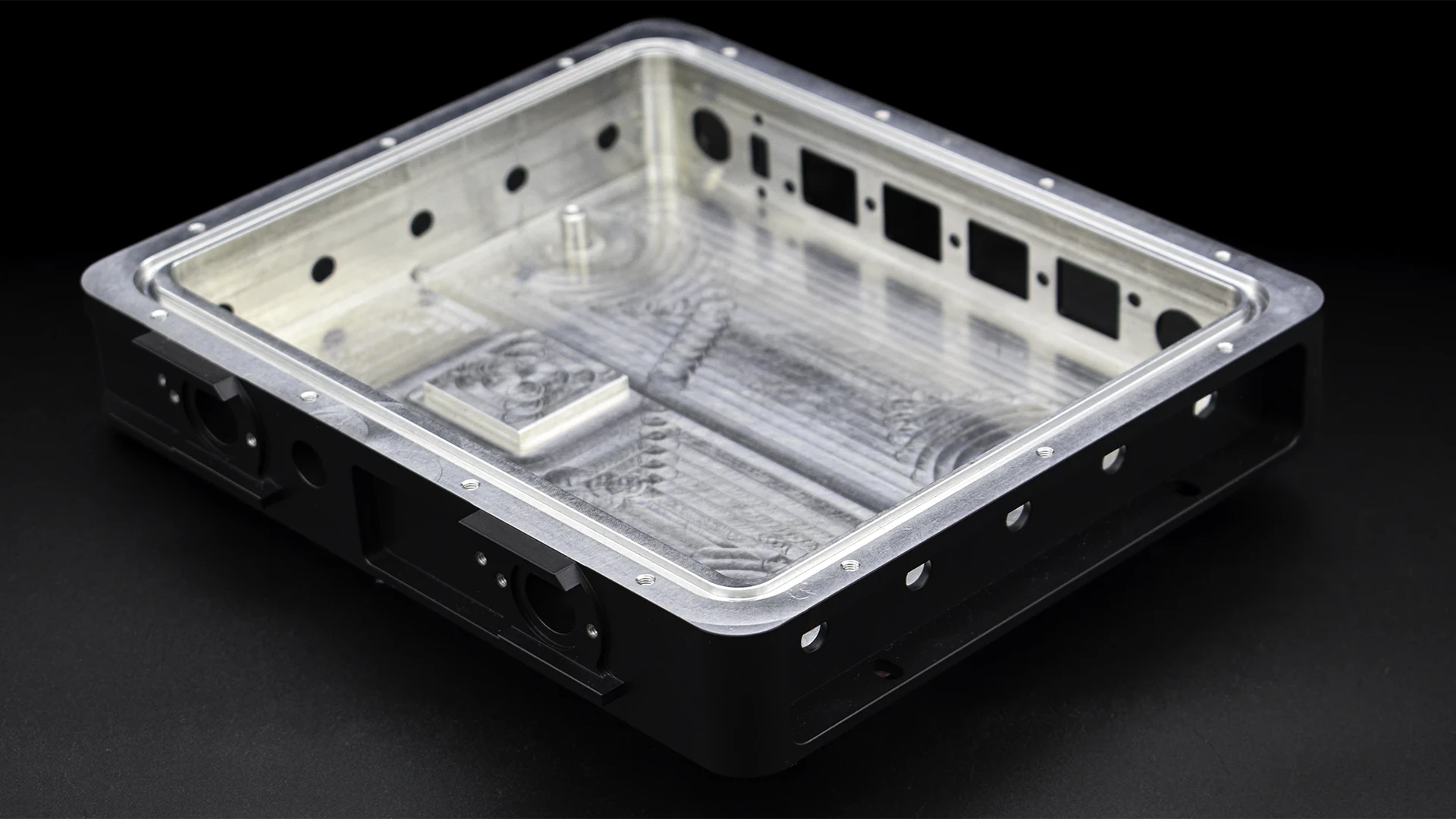
Manufacturing strategy affects the quote because the chosen route determines set-up time, workholding, tool access, cycle time, inspection method, scrap risk, and repeatability.
One of the clearest differences between instant CNC quotes and human-reviewed quotes is how the manufacturing route itself is evaluated.
Take a part with deep pockets, a thin unsupported wall, and a tight side-face tolerance. You could run it with multiple simple set-ups, or change the approach to reduce movement, support the wall, and control that face properly. Both routes can produce a part. Only one is likely to work first time and keep working across a batch.
One route may prioritise speed. Another may prioritise stability and repeatability.
Complex parts with multiple features, difficult access, or multi-sided machining often require advanced 5-axis CNC machining strategies to maintain accuracy, reduce setup variation, and improve repeatability across production.
A human reviewer will think through the sequence step by step. How will it be clamped? Will the wall move when material is removed? Do we need a different toolpath or an extra operation to hold the tolerance?
Those choices affect things like:
- cycle time (how long each part takes)
- number of set-ups (and the chance of error between them)
- fixturing (simple vice vs custom support)
- tool wear and tool choice
- repeatability from part to part
- inspection time and method
- scrap risk if something moves or distorts
- lead time, especially at higher volumes
That thinking changes the quote because it changes the work involved. It also reduces the likelihood of problems appearing later during production.
Finishing is often underestimated during quoting
Finishing is often underestimated because coatings, anodising, passivation, bead blasting, masking, handling, and cosmetic requirements can all affect final dimensions, inspection, cost, and lead time.
Finishing is one of the most common areas where quoting assumptions create downstream issues.
For example, a machined aluminium part may meet tolerance before anodising, but fall out of tolerance after coating because material thickness was not properly accounted for. Many instant quoting systems process the model geometry without fully assessing how downstream finishing operations affect the final condition of the part.
A human reviewer is more likely to stop and ask practical questions. Does the coating affect any tight fits? Do certain faces need masking? Are there cosmetic requirements that change how the part needs to be handled? Is there additional time required for inspection before and after coating?
A hole which passes inspection before anodising may become undersize afterwards if coating growth was not considered. The issue is not the anodising itself. The issue is whether the manufacturing route anticipated the finishing process correctly from the start.
The instant quote prices the machining. A thorough human-reviewed quote is more likely to price the complete manufacturing process.
What Procurement teams should look for in a CNC quote
Procurement teams should look for evidence that the supplier has reviewed the manufacturing risks behind the price, not just returned the lowest number.
When comparing CNC machining quotes, price matters. But the assumptions behind the quote matter as well.
A quote which appears cheaper initially can become significantly more expensive later if it leads to delivery delays, quality escapes, additional inspection burden, production instability, internal escalation, rework, or scrap.
When reviewing a CNC quote, useful questions include:
- Has the supplier questioned any manufacturability risks?
- Have finishing tolerances been considered properly?
- Is the quote based on prototype assumptions or repeat production?
- Has fixturing and inspection methodology been considered?
- Are the lead times realistic for the actual process route?
- Has the supplier identified any geometry or tolerance concerns?
- Does the supplier sound confident because they understand the risk, or because they have not identified it yet?
For Procurement teams especially, the safest supplier is often the supplier whose process and communication are easiest to defend internally.
If inspection evidence, traceability, and documentation quality are important, it is worth understanding what good CNC quality assurance looks like before comparing suppliers.
What a good human-reviewed CNC quote looks like
A good human-reviewed CNC quote clearly explains what has been assessed, what assumptions have been made, where the manufacturing risks are, and how the supplier plans to make the part reliably.
A strong CNC machining quote does more than return a price. It reduces uncertainty before production begins. In practice, this usually means the supplier has reviewed the drawing against how the part will actually be manufactured.
A strong review process often includes:
- clarifying questions around datums, critical features, or finishing
- identification of conflicting or unclear drawing information
- realistic lead times based on the actual process route
- visibility of manufacturing risks before production starts
- consideration of repeatability and batch stability
- alignment between machining, inspection, finishing, and delivery
At Penta, this review happens during our “Quoting with Care” stage within the Penta Proven Process, where drawings are assessed against manufacturability, inspection requirements, finishing impact, and repeat production stability before a quote is finalised.
This review process takes longer because the drawing, manufacturing route, inspection requirements, and production risks are being assessed in detail before machining begins. The additional time helps reduce avoidable surprises later in production.
When instant CNC quotes make sense
Instant CNC quotes make sense when the part is simple, the tolerances are standard, the finish is basic, the quantity is low, and the main requirement is fast budget pricing.
Instant quotes are useful when speed matters more than detail. For example, early-stage prototypes, simple brackets, or parts where you are still testing a concept. At this stage, you are often looking for a rough cost, a quick turnaround, or a way to sense-check a design.
They work well when:
- the part is simple and easy to machine
- tolerances are not especially tight
- there are no critical fits or interfaces
- finishing is basic or not required
- you only need a small number of parts
For early-stage development work, they can reduce friction and accelerate decision-making.
When human-reviewed CNC quotes become more important
Human-reviewed CNC quotes become more important when the part has tight tolerances, complex geometry, finishing requirements, inspection evidence, repeat batches, or a high cost of failure.
That includes situations where:
- tolerances directly affect fit or function
- geometry is more complex, such as thin walls, deep pockets, or multiple interacting features
- finishing could affect dimensions or cosmetic consistency
- the part needs to repeat consistently across batches
- inspection evidence and traceability are important
- the part supports production-critical assemblies
- failure would create delays, rework, escalation, or operational disruption internally
At that stage, the focus starts shifting away from pricing speed and towards process stability, repeatability, delivery confidence, risk reduction, and long-term manufacturability.
The question is no longer only whether the part can be machined once. The question becomes whether it can be manufactured consistently, inspected properly, and delivered reliably across repeat production.
Instant quotes help buyers move quickly during early-stage development and simple prototype work. Human-reviewed quotes help assess whether the manufacturing route is likely to remain stable once the part moves into production.
The right approach depends on what matters most for that specific job.
Conclusion
The right CNC quote depends on the risk behind the part. Instant quotes can help with simple early-stage work, but production-critical components usually need a deeper review of how the part will be manufactured, inspected, finished, and delivered.
Instant CNC quotes are useful when you need a quick answer for simple, early-stage parts. They help you move fast.
As soon as the part matters in production, the question changes. You are no longer asking “how quickly can this be priced?” You are asking “will this work first time, and will it keep working across a batch?”
That is where a human-reviewed CNC machining quote makes the difference. An engineer checks the drawing, thinks through how the part will be held and machined, considers tolerances and finishing, and plans a route that will hold up in the real world.
The price you receive is not just a number. It reflects the method, the risks, and how the part will actually be made.
If speed is the priority, instant quotes are often the right tool. If the goal is stable production, repeatable quality, predictable delivery, and fewer downstream surprises, the depth behind the quote matters far more than how quickly it arrives.
If you’re reviewing suppliers for repeat production work, our CNC machining service is designed around manufacturability, repeatability, and production stability.
A quote should do more than return a number.