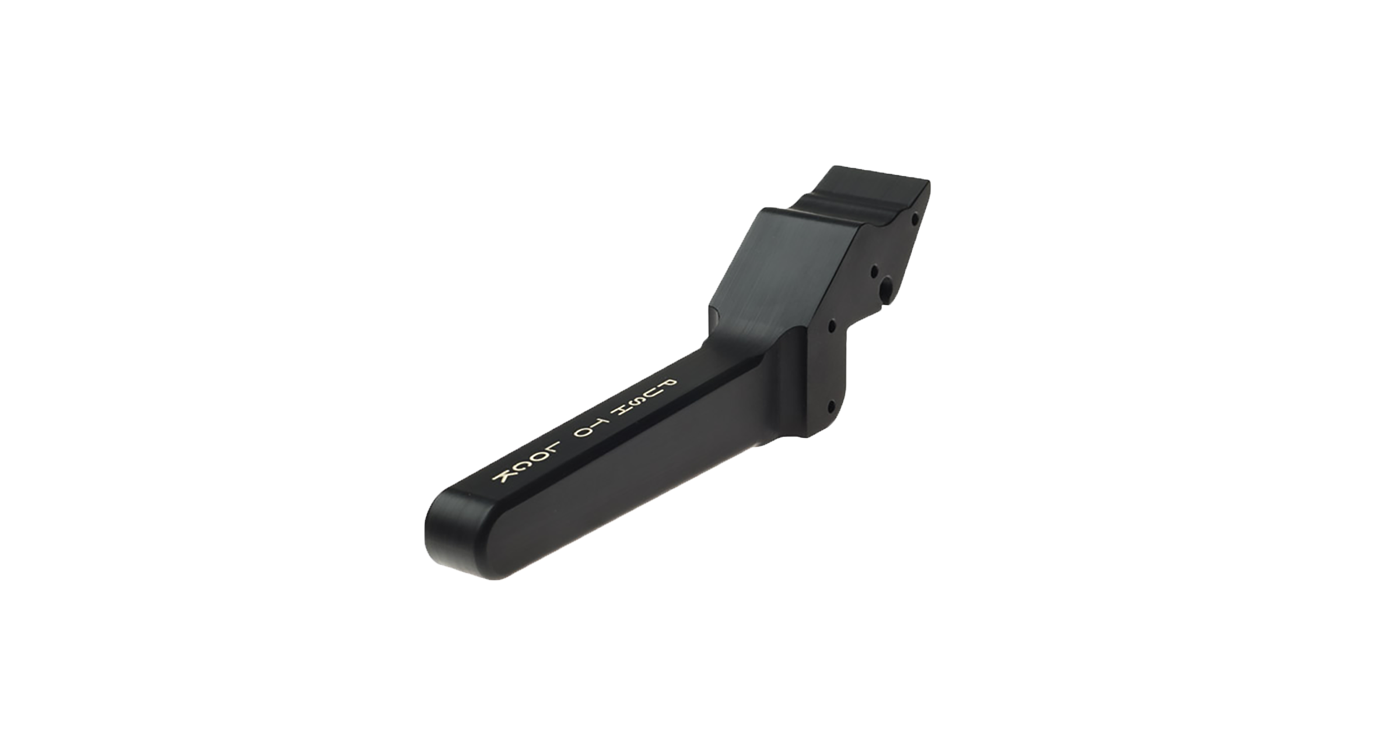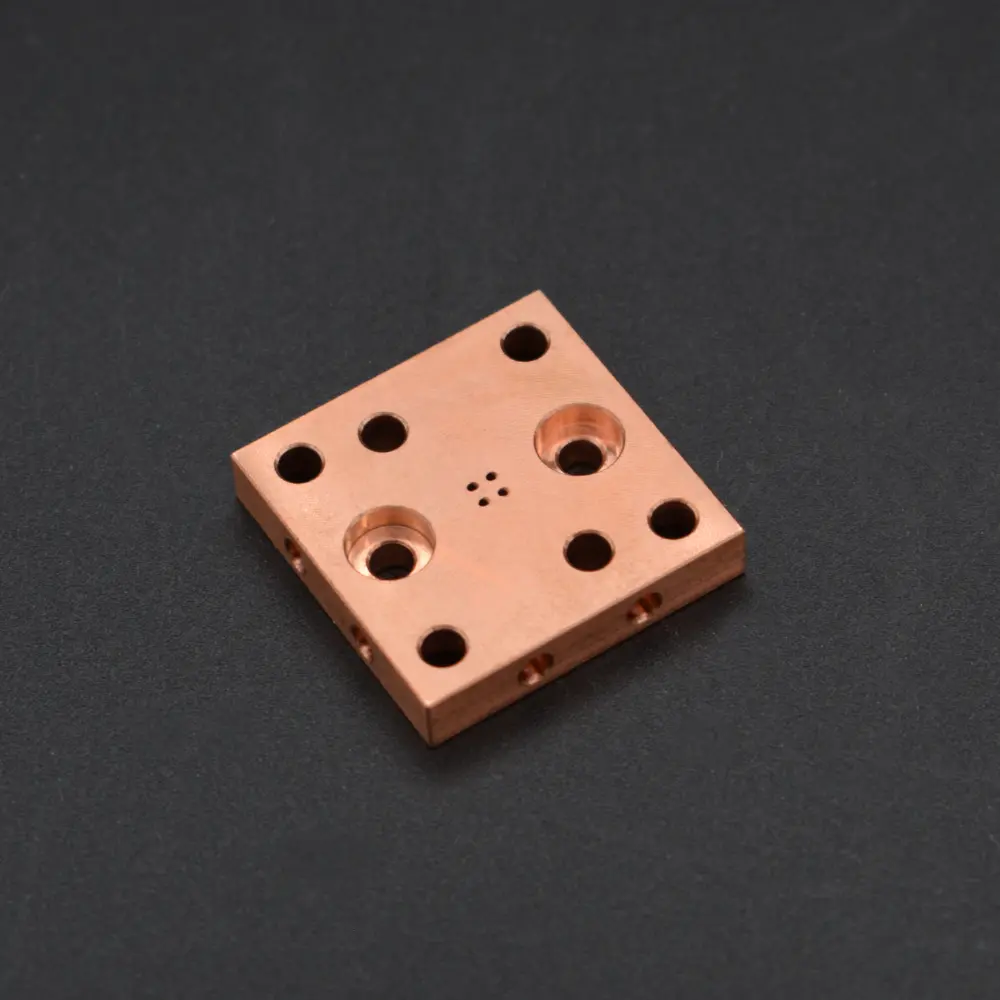
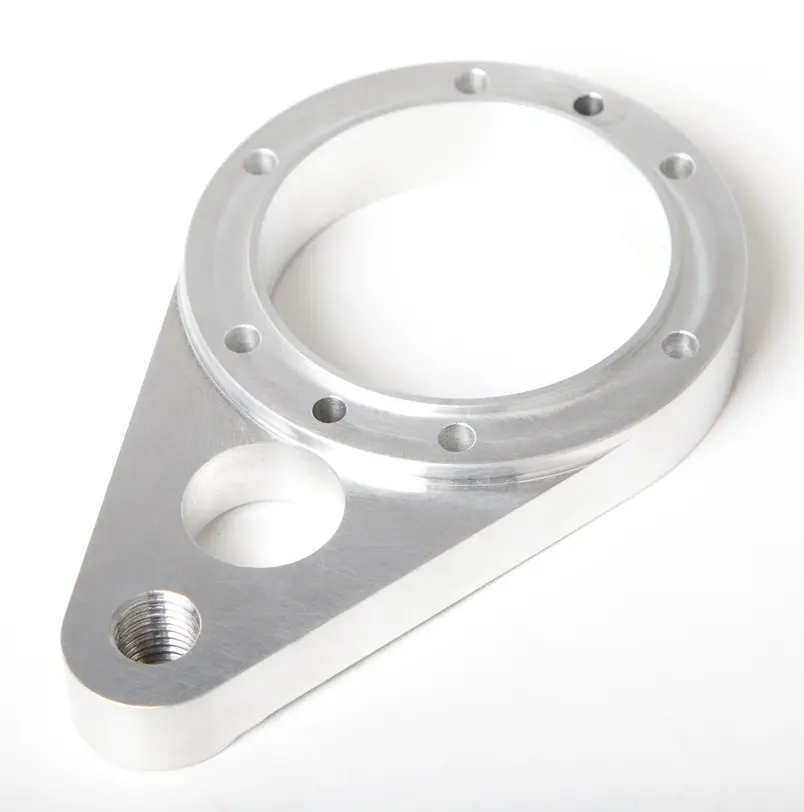

Penta helps with an urgent request for a nozzle clamp to be manufactured in aluminium tooling plate for a manufacturer of food processing and packaging machinery systems for international, blue chip organisations.
Background
One of our largest customers is a manufacturer of food processing and packaging machinery systems for international, blue chip organisations. We regularly manufacturer both new build machine components and spare part requirements.
The Problem
On 12th December, Penta received an urgent request for a nozzle clamp to be manufactured in aluminium tooling plate. The part also required a hard anodise finish. The deadline for this order was less than eight standard working days. The aluminium machined nozzle clamp had to be packed in a suitcase for a flight out of the UK on 26th December.
Initial Assessment
We used our extensive aluminium tooling plate machining experience and knowledge of hard anodise plating allowances to quote on the items. Two days later on 14th December we received the go ahead, giving us only 4 working days to machine the item, allowing two days for the hard anodise finishing.
The Penta Solution
Due to the tight deadline, we had to make emergency adjustments to our production schedule. The parts were allocated to one of our highly skilled machinists who utilised their extensive experience to complete the part early, giving the plating company a vital extra half day to complete their process. The components made it into their suitcase and on to the flight.